When Uncle Sam Accidentally Made Denim Cool: The Fabric Rationing That Launched a Fashion Revolution
When Denim Was Just Work Clothes
In 1941, blue jeans were about as fashionable as steel-toed boots. For nearly eight decades since Levi Strauss first riveted them together for California gold miners, denim pants remained stubbornly practical—worn by laborers, ranchers, and railroad workers who needed clothing tough enough to survive hard physical work. Middle-class Americans wouldn't be caught dead in jeans outside of manual labor, and wearing them to school or social events was unthinkable.
 Photo: Levi Strauss, via i.pinimg.com
Then came December 7, 1941, and everything changed. Not immediately—the transformation of denim from workwear to wardrobe staple took years and happened almost entirely by accident. World War II didn't just reshape global politics; it accidentally rewrote the rules of American fashion, starting with what people could and couldn't wear.
The Government's Fabric Diet
By 1943, the U.S. War Production Board faced a crisis. American textile mills were running at full capacity to supply military uniforms, parachutes, and equipment, but civilian clothing demand hadn't decreased. Something had to give, and that something was variety. The government issued War Production Board Limitation Order L-85, the most comprehensive restriction on civilian clothing in American history.
L-85 didn't just limit fabric quantities—it eliminated entire categories of clothing. Wool suits became scarce as sheep's wool went to military uniforms. Cotton dress pants disappeared as cotton was diverted to military uses. Synthetic fabrics were reserved for parachutes and military equipment. Suddenly, the American clothing market had massive gaps where popular garments used to be.
Denim, however, slipped through the regulatory cracks. Because jeans were classified as work clothing essential to wartime production, they remained available and affordable while other casual pants became scarce or prohibitively expensive. For millions of Americans, especially young people, jeans became the only practical option for casual wear.
The Accidental Uniform of Wartime Youth
American teenagers in 1943 found themselves in an unprecedented situation. Their usual clothing options—wool slacks, cotton chinos, dress pants—had vanished from store shelves or become too expensive for most families. Jeans, originally designed for adult manual laborers, suddenly represented the only affordable alternative for casual wear.
At first, wearing jeans felt like a temporary wartime sacrifice. But something unexpected happened as young Americans spent years in denim: they got comfortable. Jeans were more practical than anything they'd worn before—easier to wash, impossible to destroy, and suitable for any activity from school to weekend work. A generation of Americans was accidentally learning to prefer workwear over formal clothing.
The military contributed to this transformation in ways the government never intended. Soldiers on leave, accustomed to practical military clothing, often chose jeans for civilian activities. When these servicemen returned home permanently, they brought relaxed attitudes toward casual dress that would have been scandalous before the war.
Hollywood's Accidental Advertisement Campaign
While fabric rationing created the market conditions for denim's rise, Hollywood provided the cultural permission Americans needed to embrace jeans as more than just work clothes. Post-war westerns exploded in popularity, and suddenly movie screens were filled with cowboys in denim—not as laborers, but as romantic heroes and adventure protagonists.
Stars like John Wayne and Gary Cooper made jeans look heroic rather than humble. When Marlon Brando wore jeans in "The Wild One" (1953) and James Dean donned them in "Rebel Without a Cause" (1955), denim officially crossed the line from practical to fashionable. But this transformation built on a foundation laid during the war years, when fabric rationing had already forced millions of Americans to discover denim's comfort and versatility.
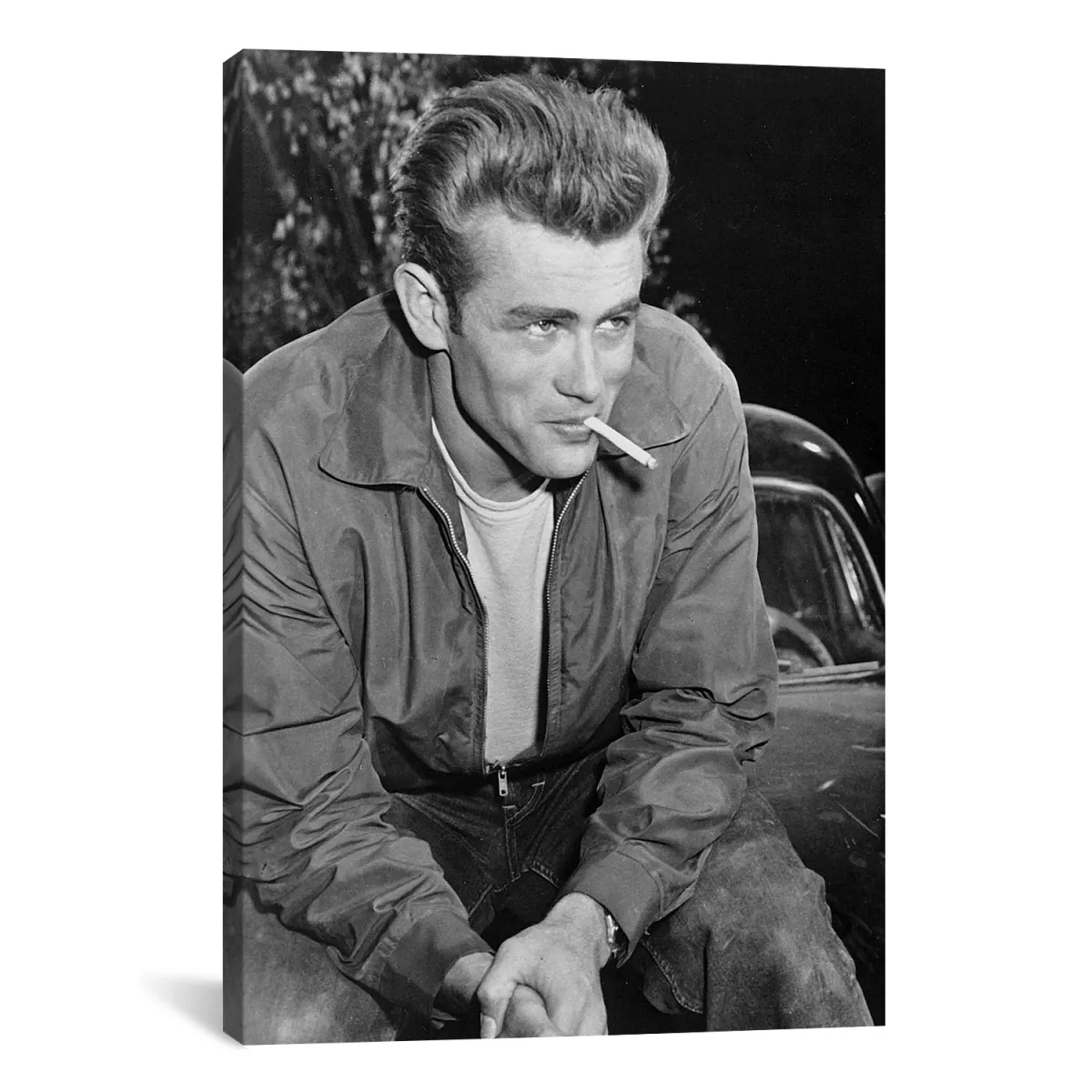 Photo: James Dean, via cdn-s3.touchofmodern.com
 Photo: Marlon Brando, via lh3.googleusercontent.com
The Economics of Accidental Fashion
The numbers tell the story of denim's wartime transformation. In 1940, Levi Strauss sold approximately 13 million pairs of jeans, almost entirely to manual workers. By 1950, that number had more than doubled to 30 million pairs, with a significant portion going to people who had never done manual labor. The war years had created a new market for denim that didn't exist before fabric rationing began.
More importantly, the war changed who was buying jeans. Pre-war denim sales concentrated in western and industrial regions where manual labor was common. Post-war sales spread across the country and across social classes. Suburban teenagers, college students, and middle-class adults had all discovered denim during the fabric shortage years and kept wearing it after other options returned.
The Casual Revolution That Wouldn't End
When fabric rationing ended in 1946, many expected Americans to abandon their wartime denim habit and return to more formal clothing. Instead, the opposite happened. A generation had grown up wearing jeans and found them superior to traditional casual wear. They were more durable, more comfortable, and increasingly, more stylish.
The post-war economic boom meant Americans had money to spend on clothing, but many chose to spend it on better jeans rather than returning to pre-war formality. Premium denim brands emerged, targeting customers who wanted the comfort of workwear with the style of fashion clothing. Jeans evolved from utilitarian necessity to lifestyle choice.
From Scarcity to Symbol
By the 1960s, the transformation was complete. Jeans had evolved from emergency wartime clothing to symbols of American casual culture, youth rebellion, and democratic values. What began as a fabric shortage had accidentally created one of America's most enduring fashion exports.
The irony is perfect: government rationing designed to support the war effort accidentally launched a fashion revolution that would define American style for generations. Denim's journey from mine shafts to mall stores began not with fashion designers or marketing campaigns, but with bureaucrats trying to manage wartime textile supplies.
Today, when jeans are a multi-billion-dollar global industry, it's worth remembering their accidental rise to fashion prominence. Sometimes the most lasting cultural changes happen not through deliberate design, but through the unexpected consequences of practical necessities. World War II fabric rationing didn't just help win a war—it accidentally invented the casual Friday that still defines American workplace culture eight decades later.