From Bomber Scraps to Backyard Staples: How Wartime Aluminum Became America's Favorite Lawn Chair

From Bomber Scraps to Backyard Staples: How Wartime Aluminum Became America's Favorite Lawn Chair
Picture a summer afternoon in the 1950s. A man in a white T-shirt cracks open a cold one and drops into a folding aluminum lawn chair on his freshly mowed suburban patch. It's one of the most American images imaginable. What most people don't realize is that the chair beneath him probably started life as part of a B-29 fuselage.
The Aluminum Avalanche Nobody Planned For
By the time the war ended in 1945, the United States had built over 300,000 military aircraft — bombers, fighters, transport planes — in one of the most extraordinary industrial mobilizations in human history. Factories that had once made refrigerators and washing machines were churning out wings and engine housings around the clock.
Then, almost overnight, they stopped.
The military didn't need planes anymore — or at least not nearly as many. What it did have was an almost incomprehensible surplus of aluminum: in raw sheet form, in parts, in partially assembled components sitting in hangars across the country. The government tried auctioning it off. It tried storing it. It tried shipping it to scrap dealers. None of those solutions moved the mountain fast enough.
At the same time, American manufacturers who had retooled for wartime production were desperately trying to figure out what to make next. Aluminum was cheap, available, and almost absurdly light. The question was: light enough for what?
The Midwestern Tinkerers Who Found the Answer
The answer, it turned out, was furniture you could carry with one hand.
Small manufacturers in Ohio, Indiana, and Michigan — states with deep roots in both metalworking and pragmatic problem-solving — started experimenting with surplus aluminum tubing and sheet stock in the late 1940s. The material was a natural fit for folding furniture. It didn't rust. It didn't rot. It weighed almost nothing. And it could be bent, welded, and riveted with the same basic equipment that had been building airplane parts for five years.
The earliest prototypes were utilitarian to the point of discomfort — essentially metal skeletons with woven plastic or cotton webbing stretched across them. But they folded flat, stacked easily, and cost next to nothing to produce. Manufacturers started selling them through hardware stores and five-and-dimes for a dollar or two apiece.
Consumers, flush with postwar optimism and newly minted suburban mortgages, snapped them up.
The Lawn That Made the Chair Necessary
Here's the part of the story that doesn't get told enough: the lawn chair didn't just need cheap aluminum. It needed the American lawn.
Before World War II, the manicured residential lawn was largely an upper-middle-class luxury. Most working Americans didn't have the space, the time, or the equipment to maintain one. But the postwar housing boom — fueled by the GI Bill, cheap mortgages, and the rapid expansion of suburbs like Levittown — suddenly gave millions of families a patch of grass to call their own.
And a lawn, it turned out, needed furniture. Not the heavy wrought-iron garden sets of the wealthy, which cost a fortune and required a dedicated garden to justify them. Something casual. Something you could drag out on a Saturday afternoon and fold back up before dinner.
The aluminum lawn chair arrived at exactly the right moment, for exactly the right price, for exactly the right emerging culture. It was the first piece of furniture designed specifically for the democratic American outdoor experience — the idea that ordinary people deserved to sit comfortably outside their own homes.
From Scrap Heap to Cultural Icon
By the mid-1950s, the folding aluminum lawn chair had become ubiquitous. Sears and Montgomery Ward sold them by the truckload. They appeared in magazine advertisements alongside barbecue grills and inflatable pools. They became the default seating at Little League games, church picnics, and Fourth of July celebrations.
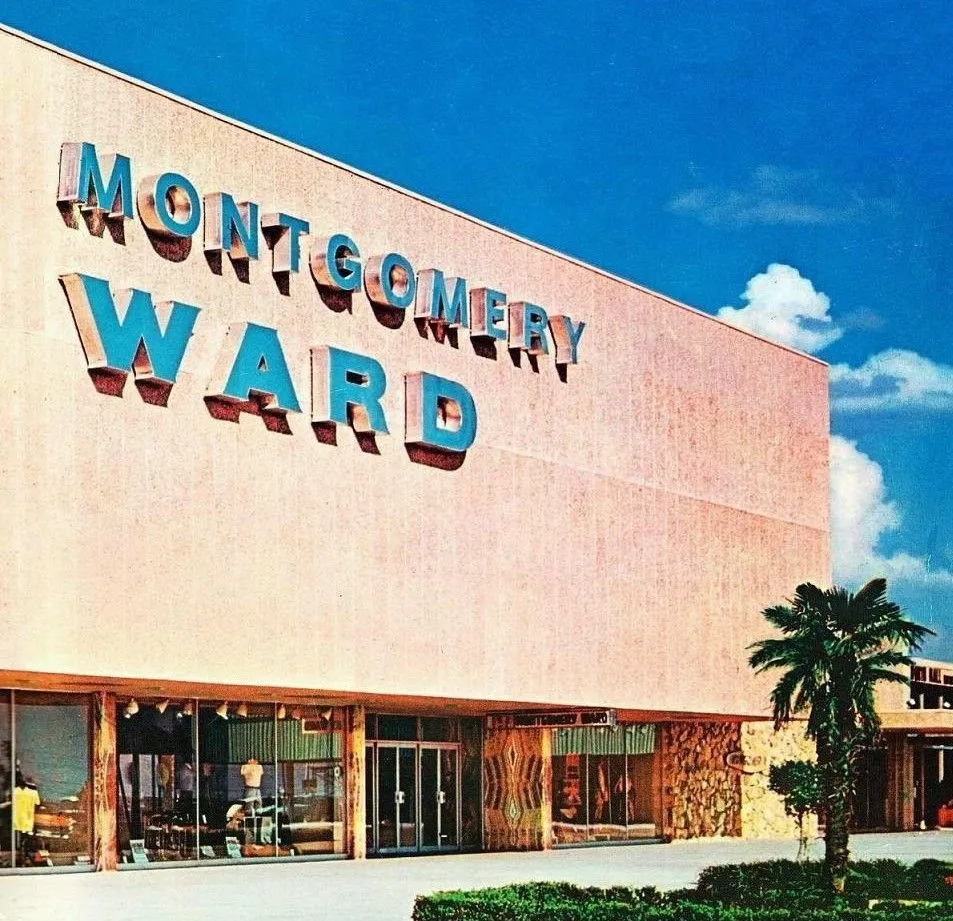 Photo: Montgomery Ward, via i.pinimg.com
Manufacturers began competing on design rather than just price. Webbing came in two-tone color combinations — green and white, red and yellow — that matched the cheerful aesthetic of postwar suburban life. Some models got armrests. Some got footrests. A few ambitious designs even attempted cup holders, decades before anyone used that phrase.
The industry that emerged from this scramble to use up military leftovers grew into something nobody had planned or predicted. By 1960, outdoor furniture was a genuine consumer category with its own trade shows, its own retail floor space, and its own seasonal marketing campaigns.
Why the Accident Still Matters
Today, the outdoor furniture market in the United States is worth billions of dollars annually. Composite resin, teak, powder-coated steel, and high-end wicker have largely replaced the humble aluminum tube. But the basic folding lawn chair — essentially unchanged from its postwar prototype — is still manufactured, still sold at hardware stores and big-box retailers, and still found in garages across the country.
It's a strange kind of legacy for a piece of scrap metal that nobody knew what to do with.
The story of the aluminum lawn chair is really a story about what happens when industrial abundance collides with social change at exactly the right moment. Nobody sat down and decided to invent outdoor furniture. A war ended, a lot of metal needed somewhere to go, and millions of Americans were suddenly standing on freshly sodded lawns wondering where to sit.
The chair showed up. The rest is backyard history.