From Clumsy Clasp to Universal Fastener: The 30-Year Struggle to Perfect the Zipper

Every morning, millions of Americans zip up jackets, pants, and bags without giving it a second thought. That satisfying zip sound seems so natural, so inevitable, that it's hard to imagine a world without it. But the zipper's path to ubiquity was anything but smooth—it took 30 years of failures, redesigns, and stubborn persistence before anyone would take it seriously.
The Clumsy Beginning
The story starts in 1893 with Whitcomb Judson, a Chicago inventor who was tired of watching his friend struggle with shoe buttons. Judson's solution was the "clasp locker"—a metal contraption with hooks and eyes that theoretically could replace buttons and laces. In practice, it was a disaster. The device was bulky, expensive to manufacture, and had an annoying habit of popping open at the worst possible moments.
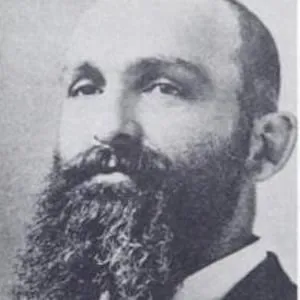 Photo: Whitcomb Judson, via www.famousbirthdays.com
Judson debuted his invention at the 1893 World's Columbian Exposition in Chicago, expecting crowds of eager buyers. Instead, he sold exactly 20 units. The clasp locker was so unreliable that most customers returned it within weeks. But Judson wasn't ready to give up.
 Photo: World's Columbian Exposition, via cdn.britannica.com
Years of Frustration
For the next decade, Judson tinkered with his design while his business partner, Lewis Walker, tried to find investors willing to bet on the contraption. They renamed it the "C-curity Fastener" and later the "Plako," but no amount of rebranding could fix the fundamental problems. The mechanism jammed constantly, the teeth didn't align properly, and the whole thing looked like something a blacksmith had cobbled together in his spare time.
By 1906, the Universal Fastener Company (Judson's business) was bleeding money and running out of patience. That's when they hired Gideon Sundback, a Swedish-American engineer who had been quietly observing the zipper's failures from the sidelines.
The Swedish Solution
Sundback approached the problem differently. Instead of trying to fix Judson's hook-and-eye system, he reimagined the entire mechanism. In 1913, after years of experimentation, he created what he called the "Hookless Fastener No. 2." This version had tiny metal teeth that interlocked when pulled together by a sliding mechanism—essentially the modern zipper.
The breakthrough wasn't just mechanical; it was mathematical. Sundback increased the number of fastening elements per inch and redesigned the slider to create uniform pressure across the entire length. For the first time, a zipper that actually worked reliably.
But even with a functional product, Americans remained skeptical. Buttons had worked fine for centuries—why fix what wasn't broken?
The Navy Changes Everything
The turning point came during World War I. The U.S. Navy, always looking for ways to make uniforms more practical, placed a large order for flying suits equipped with Sundback's fasteners. Pilots needed gear they could put on quickly, and buttons were too slow and cumbersome in an emergency.
The military contract gave the zipper its first real credibility. If it was good enough for Navy pilots, maybe civilian customers would finally take notice. But it would take another decade before the general public embraced the technology.
From Workwear to Mainstream
The 1920s saw zippers slowly creeping into American fashion, starting with practical items like galoshes and tobacco pouches. The B.F. Goodrich Company was the first major manufacturer to bet big on zippers, using them in their rubber boots and coining the term "zipper" based on the distinctive sound the fastener made.
Fashion designers initially resisted. Zippers were seen as too mechanical, too industrial for elegant clothing. But practical Americans gradually warmed to the convenience, especially as the mechanisms became smaller and more reliable.
The real breakthrough came in 1937 when French fashion designers began incorporating zippers into haute couture. Suddenly, what had been dismissed as purely functional became fashionable. American manufacturers took notice, and by the 1940s, zippers were standard on everything from children's clothing to handbags.
The Billion-Dollar Afterthought
Today, the global zipper market is worth over $12 billion annually. YKK, the Japanese company that now dominates zipper manufacturing, produces over 7 billion zippers each year—enough to circle the Earth 50 times if laid end to end.
Whitcomb Judson died in 1909, long before his invention achieved widespread success. He never lived to see his clumsy clasp locker evolve into one of the most ubiquitous fasteners in human history. Gideon Sundback, the man who actually made the zipper work, remained largely unknown outside engineering circles.
The next time you zip up a jacket or close a bag, remember that simple motion represents decades of frustration, failure, and incremental improvement. The zipper's journey from ridiculous contraption to everyday necessity proves that even the most obvious ideas can take generations to get right—and sometimes the most overlooked innovations are the ones that quietly change everything.