The Royal Mix-Up That Gave America Its Christmas Trees

The Illustration That Changed Christmas
Every December, roughly 30 million American families drag evergreen trees into their living rooms, cover them with lights and ornaments, and gather around them to exchange gifts. This ritual feels so fundamentally American that most people assume it evolved naturally from our holiday traditions. The reality is far more bizarre: America's Christmas tree obsession began with a magazine illustration that everyone misunderstood.
In December 1848, Godey's Lady's Book, America's most popular women's magazine, published what appeared to be a charming domestic scene titled "The Queen's Christmas Tree." The illustration showed a royal family gathered around a decorated evergreen, with children reaching for presents and adults admiring the festive display. American readers, seeing the crown and formal dress, assumed they were witnessing Queen Victoria's private Christmas celebration.
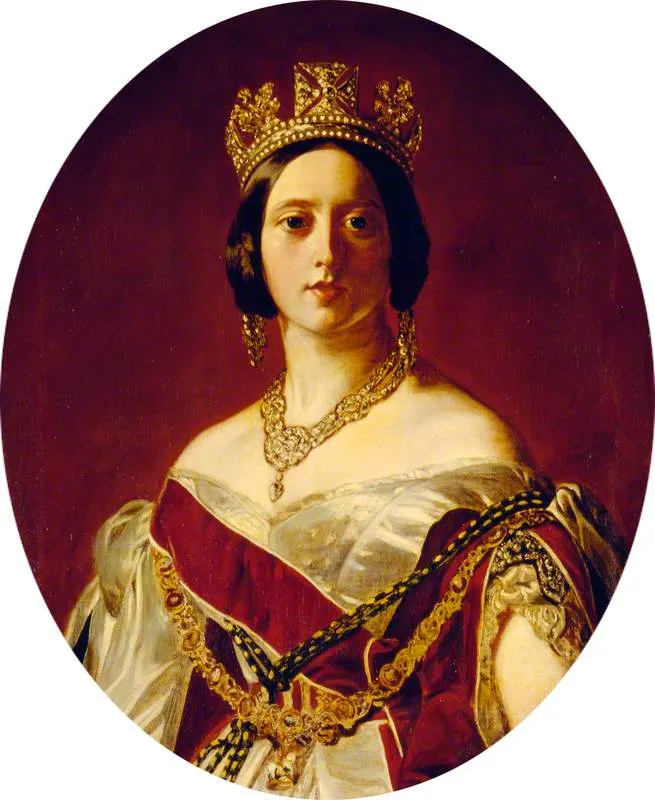 Photo: Queen Victoria, via d3d00swyhr67nd.cloudfront.net
They were wrong. The illustration actually depicted Prince Albert's childhood Christmas tradition from Germany, republished without proper context or explanation. But this misunderstanding would transform American culture in ways no one could have predicted.
The German Connection Nobody Understood
The decorated Christmas tree was a relatively recent German innovation, popular among middle-class families in Bavaria and Prussia but virtually unknown elsewhere. Prince Albert of Saxe-Coburg-Gotha had brought the tradition to Britain when he married Queen Victoria in 1840, but it remained confined to the royal household and a few German immigrant communities.
The original illustration had appeared in a German publication the previous year, showing Prince Albert's family celebrating in the traditional style of his homeland. When Godey's acquired the image, they removed the caption and context, leaving American readers to draw their own conclusions about what they were seeing.
What Americans saw was something entirely different: proof that the most powerful monarchy in the world had embraced a charming new Christmas custom. If it was good enough for Queen Victoria, it was certainly appropriate for American families aspiring to respectability and refinement.
The Aspirational Appeal
Victorian-era Americans were obsessed with British culture, particularly anything associated with Queen Victoria herself. The young queen represented everything Americans admired: prosperity, moral authority, and sophisticated domesticity. When they believed they were seeing her personal Christmas celebration, they didn't just want to imitate it—they felt obligated to.
The timing was perfect. The 1840s marked the beginning of America's first real Christmas boom. The holiday, which had been primarily religious and relatively modest, was transforming into an elaborate domestic celebration focused on children and gift-giving. Families were looking for new ways to make their Christmas celebrations more special, more memorable, more worthy of the increasingly important holiday.
The Christmas tree, as presented in Godey's, offered everything American families wanted: a centerpiece that was both beautiful and functional, a tradition that seemed both ancient and fashionable, and a way to demonstrate their sophistication and cultural awareness.
The Entrepreneurial Response
American merchants quickly recognized the commercial potential of this new "royal" tradition. Within months of the Godey's illustration, newspapers in major cities were reporting on the sudden demand for evergreen trees during the Christmas season.
But there was a problem: America in 1848 was still largely rural, and most families had easy access to evergreen forests. The real money wasn't in selling trees—it was in selling everything else that went with them.
Enterprising manufacturers began producing Christmas tree decorations specifically for the American market. German-style glass ornaments, imported candles designed for tree lighting, and elaborate tree stands all appeared in American stores for the first time in 1849. The Christmas tree had created an entirely new category of seasonal merchandise.
The candle industry experienced an unexpected boom. Traditional Christmas celebrations used minimal lighting, but the tree tradition required dozens of small candles. Candlemakers who had previously focused on practical illumination suddenly found themselves designing decorative products for a market that hadn't existed the year before.
The Urban Innovation
As the tradition spread to American cities, it evolved in distinctly American ways. Urban families, lacking access to forests, created the first commercial Christmas tree lots. Enterprising farmers from rural areas began harvesting evergreens specifically for Christmas sales, trucking them into cities and selling them from temporary stands.
New York City saw its first commercial Christmas tree vendor in 1851, just three years after the Godey's illustration. By 1855, Christmas tree lots had become a standard feature of urban Christmas shopping, creating seasonal employment and establishing the economic infrastructure that would support the tradition for the next century.
 Photo: New York City, via img.freepik.com
The urban Christmas tree also drove innovation in tree preservation and transportation. Merchants developed techniques for keeping cut trees fresh during long journeys from forest to city, leading to advances in plant preservation that would later benefit the entire agriculture industry.
The Cultural Amplification
What started as a single magazine illustration gained momentum through America's rapidly expanding media landscape. Newspapers picked up the story, describing the "royal Christmas tree tradition" and providing instructions for families wanting to create their own versions. Women's magazines published elaborate guides to tree decoration, often claiming to reveal "Queen Victoria's own methods."
Each retelling embellished the story further. By 1855, American publications were describing Christmas trees as an "ancient British royal tradition," completely divorced from their actual German origins. The misunderstanding had become so embedded in American culture that correcting it would have been impossible—and unnecessary.
The Generational Lock-In
The children who grew up with Christmas trees in the 1850s became the parents of the 1870s, and they naturally wanted to recreate the magical Christmas experiences of their own childhoods. What had started as imitation of perceived British sophistication became genuinely American tradition, passed down through families who no longer remembered or cared about its origins.
By 1880, the Christmas tree was so associated with American Christmas that European visitors often commented on it as a distinctly American custom. The tradition had completed its cultural journey from German innovation to misunderstood British import to authentic American institution.
The Modern Empire
Today's Christmas tree industry generates over $2 billion annually in the United States alone. Christmas tree farms operate in all 50 states, seasonal retail lots employ thousands of workers, and the ornament industry supports manufacturers worldwide. The National Christmas Tree Association estimates that Americans purchase nearly 30 million real Christmas trees each year, plus millions of artificial ones.
None of this would exist without a simple case of mistaken identity. A German prince's childhood tradition, misidentified as a British royal custom, became the foundation of a uniquely American Christmas ritual that now influences global holiday culture.
The next time you're decorating your Christmas tree, remember that you're participating in a tradition born from cultural confusion. Sometimes the most powerful customs emerge not from careful planning or ancient wisdom, but from simple misunderstandings that capture our imagination and refuse to let go.