The Plastic Nobody Wanted That Quietly Revolutionized the American Kitchen
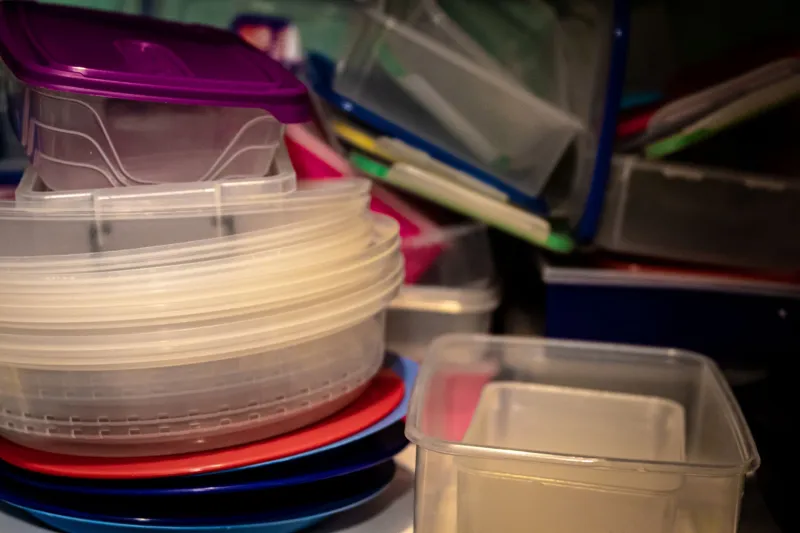
There's a good chance you have at least one of them shoved in a cabinet right now — that mismatched stack of plastic containers with lids that may or may not still match. You probably don't think much about them. But the story of how those humble boxes got into your kitchen is stranger, and more revealing, than you'd ever expect.
A Byproduct Nobody Knew What to Do With
In the early 1940s, a chemist named Earl Tupper was working at DuPont, the chemical giant that had its hands in everything from explosives to nylon. Tupper was fascinated by polyethylene — a waxy, flexible plastic that was a byproduct of the oil refining process. At the time, it was considered industrial waste. Nobody wanted it. It was greasy, ugly, and smelled vaguely like chemicals.
Tupper saw something else. He spent years refining the material, eventually figuring out how to purify it into something smooth, lightweight, and — crucially — airtight. By 1946, he had produced his first line of Tupperware containers, sold through hardware stores and department stores across the country.
They flopped completely.
The problem wasn't the product. It was that nobody understood how to use it. The famous "burping" seal — that satisfying press-and-release that locks out air — was unlike anything consumers had encountered. Store clerks couldn't explain it. Customers picked it up, couldn't figure it out, and put it back down. Tupperware sat on shelves gathering dust.
Enter the Woman Who Saved It
Brownie Wise had nothing to do with chemistry or industrial plastics. She was a divorced single mother in Florida who had been selling Stanley Home Products door-to-door to make ends meet. She was good at it — exceptionally good — and somewhere along the way she got her hands on some Tupperware and started selling it the same way.
Her insight was simple but brilliant: people needed to see the burp. They needed someone to show them how it worked, in a relaxed social setting, surrounded by friends and neighbors who were already enthusiastic. A store shelf couldn't do that. A living room could.
By 1951, Wise had convinced Earl Tupper to pull his product from retail stores entirely. No more hardware store shelves. Tupperware would be sold exclusively through home parties — what the company called "Tupperware Parties." Wise became the company's vice president of marketing, the first woman to appear on the cover of Business Week magazine, in 1954.
The parties were a phenomenon. Housewives hosted them, earned commissions, and built small businesses out of their own social networks. At its peak, a Tupperware party was happening somewhere in America every few seconds.
More Than a Container — A Cultural Shift
What's easy to miss about Tupperware's rise is what it actually changed. Before the 1950s, storing leftover food was a somewhat shameful domestic act. Leftovers implied poverty, poor planning, or a kitchen that wasn't running efficiently. You covered things with wax paper or a plate turned upside down and hoped for the best.
Tupperware reframed all of that. Suddenly, storing food wasn't a sign of failure — it was a sign of organization. Of modern, efficient homemaking. The containers were pastel-colored, stackable, and designed to be seen. They sat proudly in refrigerators and on countertops. Having a full set of matching Tupperware became something to aspire to.
Food waste, which had been a quiet domestic embarrassment, became something you could visibly manage and control. The refrigerator, which had previously been a cold box you tried not to look too closely at, became something you could actually organize.
The Party Model That Changed Direct Sales Forever
The business model Brownie Wise pioneered didn't just sell plastic containers — it invented an entirely new category of American commerce. The Tupperware Party became the template for decades of direct sales companies: Avon, Mary Kay, Pampered Chef, and eventually the entire multi-level marketing industry all owe something to what Wise built in the early 1950s.
It also created economic opportunity for women at a time when most corporate doors were closed to them. Tupperware's sales force was almost entirely female, and many women built genuine incomes — and genuine independence — through it. That's a complicated legacy, given how MLM structures have evolved since, but in its original form, the Tupperware model was genuinely groundbreaking.
The Burp Heard Round the Kitchen
Tupper himself sold the company in 1958 for $9 million, moved to a Central American island, renounced his US citizenship to avoid taxes, and largely disappeared from public life. Brownie Wise, who had arguably done more than anyone to make the brand a household name, was fired by Tupper before the sale — reportedly because he didn't want a high-profile woman complicating the acquisition deal. She received no stock, no severance beyond a single year's salary, and has never quite gotten the historical credit she deserves.
The containers, meanwhile, kept selling. Tupperware became so embedded in American domestic life that the brand name turned into a generic word — like Kleenex or Band-Aid — for an entire category of product.
Next time you press that lid down and hear that little burp of air, you're completing a gesture that a divorced Florida saleswoman perfected in someone's living room more than seventy years ago. A gesture that started with industrial waste, reinvented home economics, and quietly changed the way Americans think about the food they almost threw away.
Not bad for a piece of plastic nobody wanted.