How a Tobacco Company's Doctor Convinced America That Skipping Breakfast Could Kill You
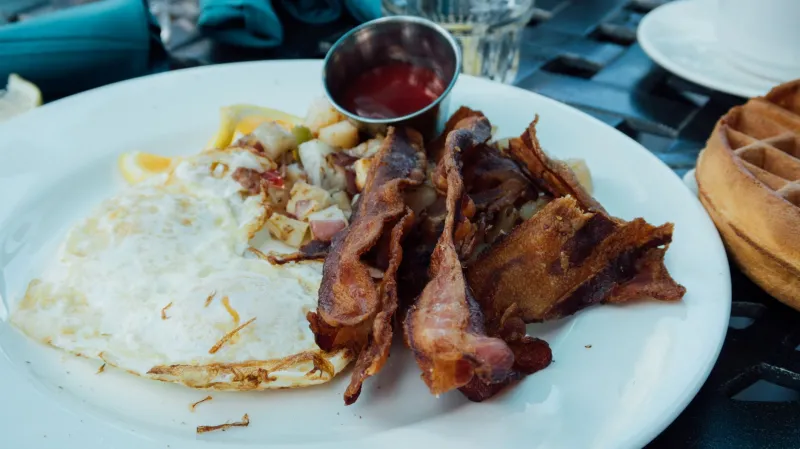
Ask most Americans what a proper breakfast looks like and they'll describe roughly the same thing: eggs, bacon or sausage, maybe some toast, orange juice, coffee. It feels timeless. Foundational. The kind of meal that seems like it must have been handed down through generations of practical, hardworking people who knew what their bodies needed.
It wasn't. It was invented by a press agent.
What Americans Actually Ate Before the Campaign
In the early twentieth century, American breakfast habits were far more modest than what we'd recognize today. For most working families, breakfast was light — a piece of bread, some porridge, maybe coffee. The idea that you needed a substantial, protein-heavy meal to start your day wasn't a widespread nutritional belief. It was barely a thought.
Then came Edward Bernays.
Bernays is one of the most influential — and least-discussed — figures in American cultural history. A nephew of Sigmund Freud, he essentially invented the modern public relations industry. He understood, better than almost anyone at the time, that you could change mass behavior not by telling people what to do, but by manufacturing the appearance of expert consensus.
In the late 1920s, Beech-Nut Packing Company — which sold, among other things, bacon — hired Bernays to boost flagging sales. His approach was characteristically indirect.
The Doctor's Letter That Changed Everything
Rather than simply advertising bacon, Bernays went to his own physician and asked a simple question: is a heavier breakfast better for you than a light one? The doctor, somewhat predictably, said yes — the body needs fuel after a night's rest, and a substantial morning meal provides it.
Bernays then asked that doctor to write to 5,000 other physicians across the country asking them the same question and requesting their signed endorsement of the idea. Around 4,500 doctors agreed. Bernays then took those endorsements — thousands of physicians recommending a hearty breakfast — to newspapers across the country.
The headlines wrote themselves. Doctors Agree: Americans Need a Bigger Breakfast. The medical community, as far as the public could tell, had reached a conclusion. The authority wasn't Beech-Nut. It was science.
And what did a hearty breakfast include? Bacon and eggs, specifically. Protein. Substance. The kind of meal, the campaign implied, that serious, healthy Americans ate.
The Tobacco Connection
Here's where the story gets stranger. Bernays had already run a remarkably similar campaign — with far more troubling consequences — for the American Tobacco Company, makers of Lucky Strike cigarettes. In that campaign, he convinced women to smoke by framing cigarettes as symbols of liberation and independence. He called them "torches of freedom." It worked devastatingly well.
The breakfast campaign borrowed the same playbook: take a commercial interest, dress it in the authority of medicine or social values, and let the manufactured consensus do the selling. People weren't being sold bacon. They were being told by their doctors that their health depended on it.
Bernays himself was remarkably open about what he'd done. He wrote about it in his books and lectures, framing it as a straightforward example of how public opinion could be shaped. He didn't see manipulation — he saw engineering.
Cereal Enters the Picture
The bacon-and-eggs story is only half of the breakfast transformation. Running alongside it was a parallel campaign driven by a very different industry: cereal manufacturers.
John Harvey Kellogg had been promoting grain-based breakfast foods since the late 1800s, originally as part of a strict health regimen at his sanitarium in Battle Creek, Michigan. Kellogg's motivations were deeply moralistic — he believed heavy, protein-rich foods stimulated unhealthy urges, and that bland, simple cereals were the path to physical and spiritual purity.
His brother Will Keith Kellogg saw a commercial opportunity and ran with it, eventually founding the Kellogg Company and transforming what had been a health-retreat food into a mass-market product. C.W. Post did the same with his own competing cereals. Both companies poured money into advertising that framed their products as modern, scientific, and essential.
By the 1930s, Americans were receiving consistent messaging from two directions: protein-industry campaigns saying breakfast should be heavy and savory, and cereal-industry campaigns saying it should be light and grain-based. Both agreed on one thing — that eating breakfast at all was medically and morally necessary.
The Institution That Advertising Built
What's remarkable is how quickly and completely these campaigns worked. Within a generation, the idea of breakfast as a non-negotiable daily ritual — and a substantial one — had become so embedded in American culture that it stopped feeling like a choice. It felt like common sense. Like something your grandmother knew.
The food industry that grew up around it became enormous. Breakfast foods today represent a multi-billion dollar category. Diners built their identities around the morning meal. The phrase "most important meal of the day" — which Kellogg's and other cereal companies promoted heavily — became received wisdom that most Americans still repeat without knowing where it came from.
A Habit That Outlived Its Origins
Nutritional science has complicated the picture considerably since then. Studies on intermittent fasting, meal timing, and metabolic health have reopened questions that Bernays and the cereal companies considered settled. Whether breakfast is truly necessary — or whether the specific American version of it makes any particular sense — is genuinely contested among researchers today.
But the habit persists. The diner counter, the box of cereal, the package of bacon in the refrigerator — they're all artifacts of a moment in the 1920s when a press agent asked a doctor a convenient question and mailed the answer to five thousand colleagues.
You probably had breakfast this morning. Now you know who to thank.