How Prohibition and Empty Pockets Made Tipping an American Obsession

Walk into any American restaurant today and you'll automatically calculate 18-20% on top of your bill. It feels as natural as saying "please" and "thank you." But tipping culture in America has a surprisingly contentious history—one that involves moral crusades, economic desperation, and a federal loophole that turned voluntary generosity into social obligation.
The European Import Nobody Wanted
Tipping arrived in America during the 1850s and 1860s, brought back by wealthy Americans who had traveled to Europe and experienced the continent's established gratuity customs. But unlike the Old World, where tipping reflected centuries of class distinctions, America was supposed to be different—a place where honest work earned honest wages.
Many Americans viewed tipping as fundamentally un-American. It created an uncomfortable master-servant dynamic that contradicted the country's egalitarian ideals. "Tipping is a vice," declared William Scott in his 1916 book "The Itching Palm." "It is un-American. It is importing European servility."
 Photo: William Scott, via img-s-msn-com.akamaized.net
The backlash was swift and severe. Between 1909 and 1918, six states—Washington, California, South Carolina, Georgia, Arkansas, and Tennessee—actually banned tipping outright, making it illegal to give or receive gratuities. Restaurant owners who allowed tipping faced fines, and workers could be arrested for accepting tips.
When the Booze Stopped Flowing
Everything changed with Prohibition in 1920. Restaurants that had relied heavily on alcohol sales—often their most profitable items—suddenly faced a massive revenue shortfall. Wine and cocktails had enormous markups; food alone couldn't keep many establishments afloat.
Faced with potential bankruptcy, restaurant owners got creative. They couldn't legally serve alcohol, but they could reduce their labor costs by shifting the burden of paying servers onto customers. The tip, once seen as an optional courtesy, became an economic necessity for both struggling businesses and their workers.
This wasn't an organized conspiracy—it was thousands of individual business owners making the same desperate calculation. Pay servers less, encourage tipping more, and maybe survive until Prohibition ended.
Depression Makes It Permanent
Just as restaurants were adapting to the Prohibition economy, the Great Depression hit. Suddenly, the temporary cost-cutting measure of relying on tips became a survival strategy for an entire industry.
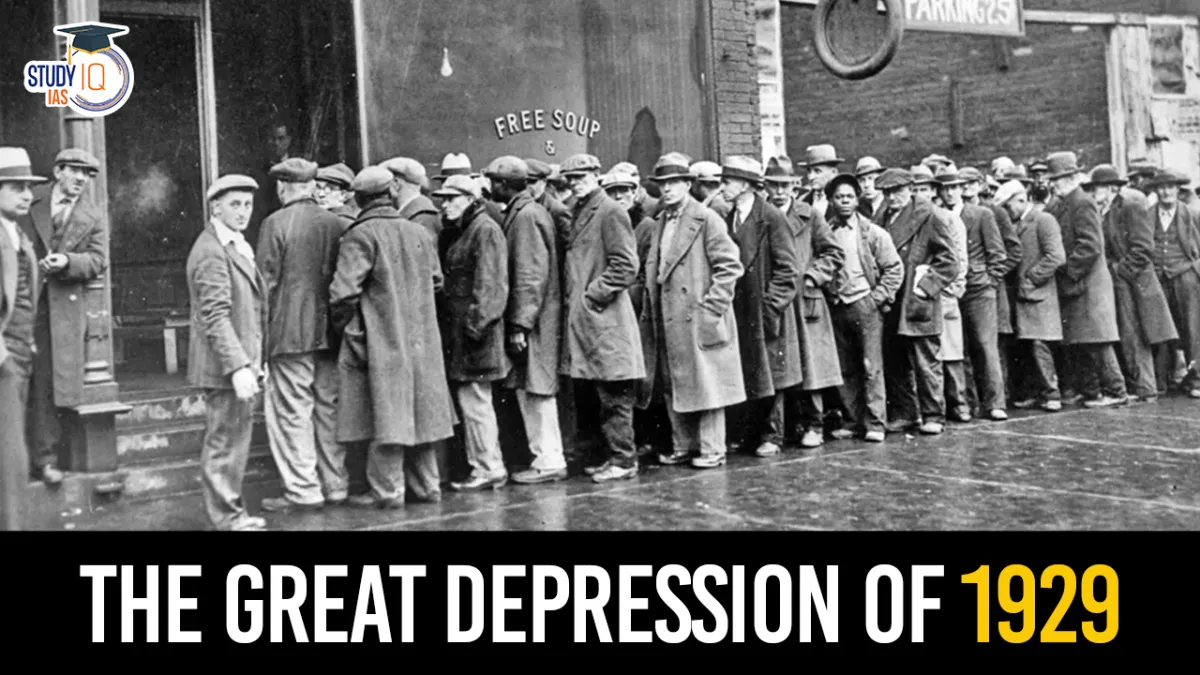 Photo: Great Depression, via www.studyiq.com
With unemployment soaring and customers spending less, restaurants operated on razor-thin margins. Paying full wages to servers became impossible for many establishments. Workers, grateful to have any job at all, accepted lower base wages supplemented by tips. The arrangement that had started as a Prohibition workaround became the new normal.
Customers, meanwhile, found themselves in an awkward position. Refusing to tip meant watching servers—often the sole breadwinners for struggling families—go home empty-handed. What had once been seen as un-American charity became an act of basic decency.
The Federal Loophole That Locked It In
The final piece of America's tipping puzzle came in 1938 with the Fair Labor Standards Act. While the law established federal minimum wage protections for most workers, it included a crucial exception: employers could pay tipped workers less than minimum wage as long as their tips made up the difference.
This "tip credit" provision, initially intended as a temporary measure to help restaurants recover from the Depression, became permanent. It created a two-tier wage system that exists to this day—regular workers earn full minimum wage, while tipped workers can legally be paid as little as $2.13 per hour at the federal level.
The restaurant industry, which had stumbled into tip-dependent wages out of economic necessity, now had legal cover to make it permanent. What started as a crisis response became institutionalized in federal law.
Why America Went Further Than Anyone Else
Other countries experienced similar economic pressures but never developed America's extreme tipping culture. The difference was timing and context. European nations already had established service traditions and stronger labor protections. When their restaurant industries faced challenges, they found different solutions.
America's unique combination of factors—moral resistance followed by economic desperation, Prohibition's revenue crisis, Depression-era survival tactics, and a federal wage system that encouraged the practice—created a perfect storm that embedded tipping deeper into the culture than anywhere else in the world.
The Uncomfortable Status Quo
Today, the American tipping system affects over 4.3 million restaurant workers and generates roughly $47 billion annually in gratuities. It's become so entrenched that attempts to eliminate it often fail—customers resist higher menu prices, workers worry about losing tip income, and restaurant owners fear competitive disadvantage.
The practice that Americans once rejected as un-American servility is now so thoroughly American that visitors from other countries often struggle to navigate our complex tipping expectations. We've created a system where voluntary generosity became social obligation, where the price on the menu is never the price you actually pay.
The next time you calculate that familiar 20%, remember you're participating in an economic arrangement that nobody planned and few people originally wanted. American tipping culture wasn't designed—it evolved through a series of crises, compromises, and unintended consequences that turned a European custom into an American obsession.