The Real Story Behind the American Handshake — and Why Your Grip Says More Than You Think
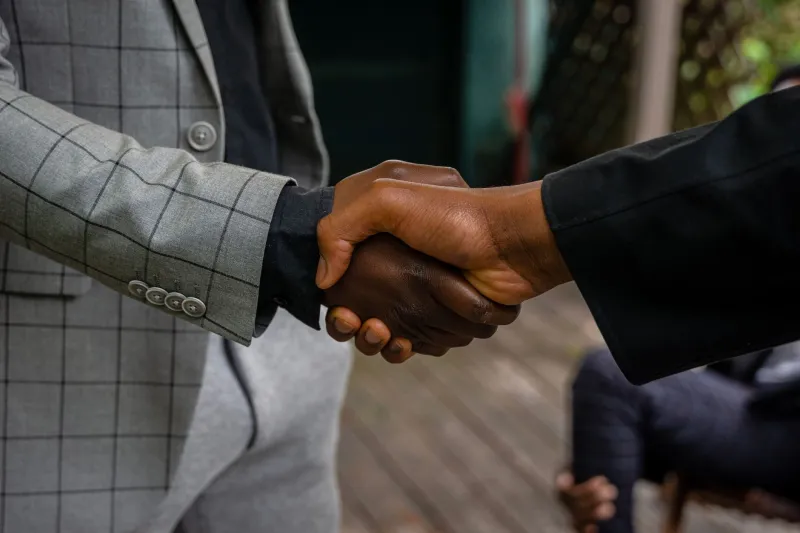
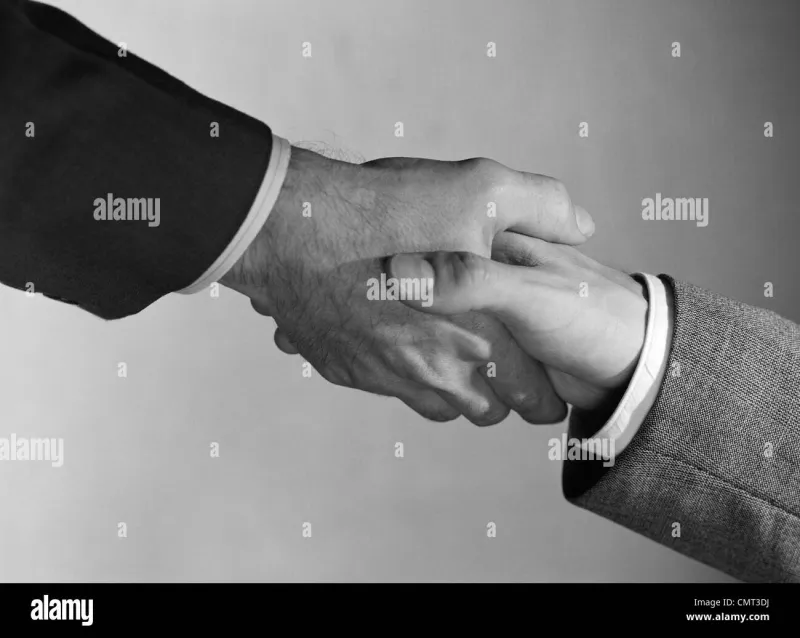
You've done it thousands of times without thinking about it. A stranger extends their hand. You extend yours. You grip, you shake, you release. The whole thing lasts maybe two seconds — and carries the weight of centuries.
The handshake is so embedded in American social and professional life that questioning it feels almost absurd. Of course you shake hands. What else would you do? But where the gesture actually came from, and how it became the particular firm-gripped, direct-eye-contact ritual Americans practice today, turns out to be a genuinely layered story — one that the usual "weapon check" explanation barely scratches.
The Weapon Theory Is Real, But Incomplete
Let's start with the part you've probably heard. The most commonly cited origin of the handshake is that medieval knights would extend an open right hand to demonstrate they weren't carrying a sword. The up-and-down pumping motion, the theory goes, was meant to dislodge any blade hidden up a sleeve.
There's something to this — open-hand gestures of peace appear in ancient Assyrian carvings, Greek and Roman artwork, and various medieval manuscripts. The idea of using the hand to signal non-aggression is genuinely ancient.
But here's the problem: a historical gesture of peace isn't the same thing as the specific handshake ritual that Americans use today in job interviews, business meetings, and first dates. That version has a much more specific lineage — and it runs through harbor towns, religious communities, and the drawing rooms of Victorian England before it ever lands in an American boardroom.
Quakers, Ships, and the Democratization of Touch
One of the most underappreciated chapters in handshake history involves the Quakers. In 17th and 18th century England and colonial America, Quakers deliberately rejected the social hierarchy embedded in gestures like bowing or hat-tipping. Those gestures implied deference — a lower person acknowledging a higher one. Quakers found that philosophically unacceptable.
The handshake, by contrast, was equal. Two people met at the same level, gave the same gesture, and neither bowed to the other. For a religious community that believed in the fundamental equality of all people before God, the handshake wasn't just a greeting — it was a theological statement.
Because Quakers were disproportionately influential in early American commerce (they were known for honest dealing and straightforward contracts), their preferred greeting traveled with them into marketplaces and trading networks. Merchants adopted it. Sailors picked it up in port towns. The handshake began spreading through Atlantic trading culture as a practical, class-neutral alternative to more elaborate European greetings.
By the time the American republic was being formed, the handshake already had a democratic flavor that fit the cultural moment perfectly.
Victorian Etiquette Turned a Gesture Into a Performance
If the Quakers democratized the handshake, the Victorians complicated it. 19th century etiquette culture — on both sides of the Atlantic, but with particular intensity in the United States — became obsessed with the question of how you shook hands. Etiquette manuals from the 1840s through the 1890s devoted serious column space to the proper handshake technique.
A handshake that was too limp suggested weakness of character. One that was too aggressive suggested poor breeding. Ladies were advised to offer their fingers delicately. Gentlemen were advised to grip firmly but not crush. The angle of the wrist mattered. The duration mattered. Whether you covered the clasped hands with your free hand — a gesture called the "politician's handshake" even then — was a subject of debate.
What this etiquette culture was really doing was turning a simple gesture into a diagnostic tool. The handshake became a moment where you were expected to reveal something about yourself, and where others were expected to read you. That framework — the handshake as character test — is still very much alive in American culture today.
How American Business Culture Made the Grip a Verdict
Enter the 20th century and the rise of American corporate and sales culture, and the handshake took on yet another layer of meaning. Self-help literature from the 1920s onward — think Dale Carnegie's How to Win Friends and Influence People and its many imitators — treated the handshake as a critical first impression tool. A firm handshake meant confidence. Confidence meant competence. Competence meant trustworthiness.
The logic was circular but culturally powerful. Generations of Americans were coached by parents, coaches, and managers to develop a firm, dry-palmed, direct handshake. Job interviews turned it into a ritual evaluation. Military culture reinforced it. The grip became a proxy for the whole person.
This is distinctly American in ways that become obvious when you travel. In many European countries, handshakes are lighter and briefer — more of an acknowledgment than an assessment. In parts of East and Southeast Asia, bowing carries the social weight that Americans load into the handshake. Even within the U.S., regional and cultural variations persist. But the firm, assertive American handshake — the one that gets taught in business school orientation — is a specific cultural artifact, not a universal human behavior.
The Science Caught Up With the Stereotype
Interestingly, researchers eventually started studying what all those etiquette writers had been claiming for decades. Studies from the University of Alabama and other institutions found that handshake quality — firmness, completeness of grip, duration, eye contact — did correlate with how people rated each other's confidence and competence in initial meetings. The handshake really does function as a rapid social signal, and people really do make fast judgments based on it.
Whether those judgments are accurate is a different question. But the fact that they happen at all suggests that centuries of cultural investment in the gesture have made it a genuine communication channel — one that transmits information about confidence, background, and social fluency in the two seconds before a single word is spoken.
What Two Seconds Actually Carries
Next time you extend your hand, consider what's packed into that moment. There's a Quaker egalitarian philosophy. There's a medieval peace gesture filtered through Atlantic shipping routes. There's a Victorian etiquette industry that turned grip strength into a personality test. There's a century of American self-help culture insisting that confidence is a physical performance.
All of that — compressed into a two-second squeeze and release.
The handshake isn't just a greeting. It's a time capsule. And now you know exactly what's inside it.