Grounded by War, Freed by the Highway: How Rationing Built America's Love Affair With the Open Road
Grounded by War, Freed by the Highway: How Rationing Built America's Love Affair With the Open Road
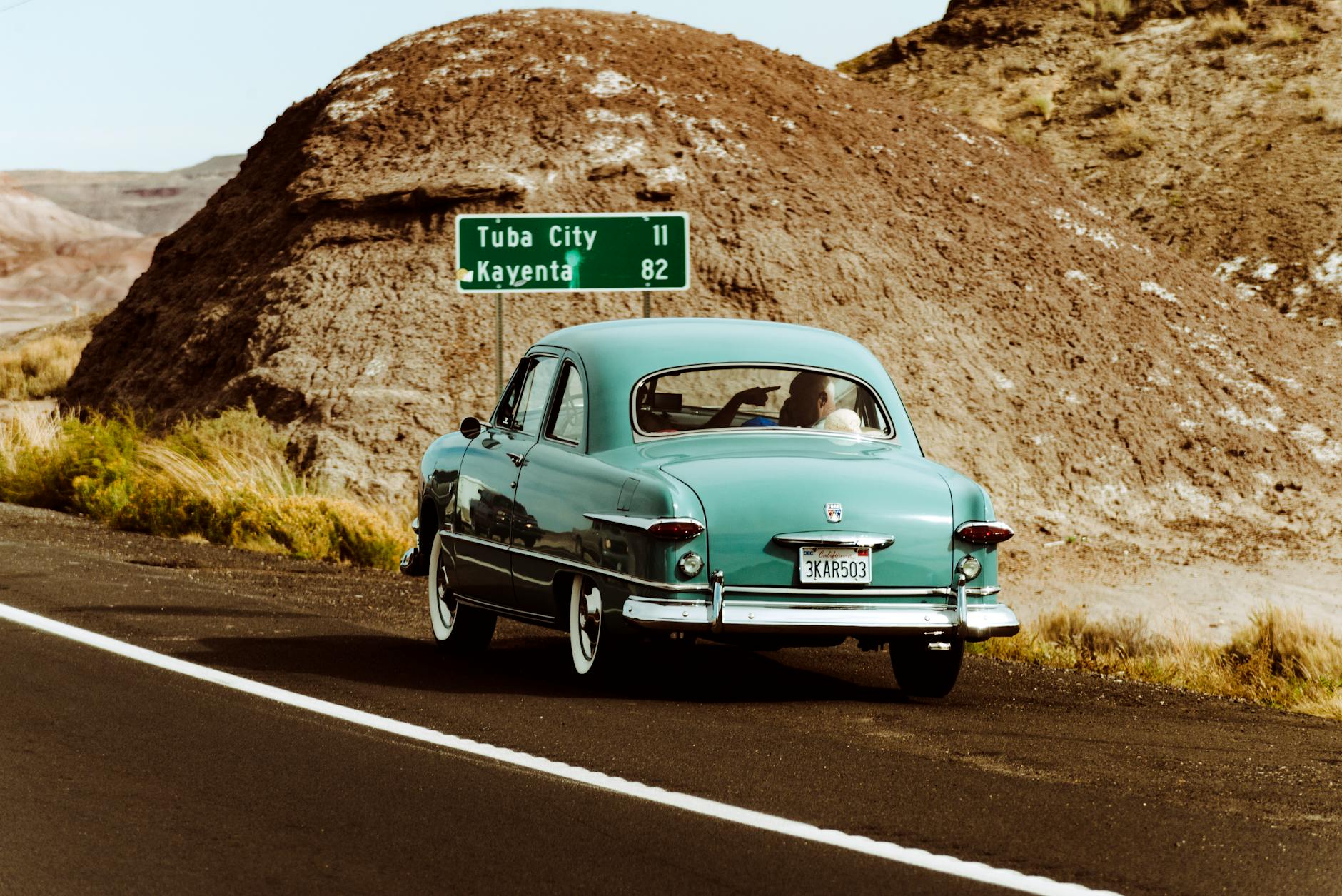
The American road trip feels like it has always existed — an almost mythological expression of freedom, independence, and the wide-open country. Jack Kerouac wrote about it. Steinbeck mapped it. Route 66 turned it into a national symbol. Every summer, millions of families load up the car and point it somewhere distant, chasing that particular feeling of motion and possibility that seems uniquely, stubbornly American.
But that culture didn't emerge organically from the landscape. It was, in a strange way, built by the very forces that tried to prevent it. The story of how America fell in love with the road trip starts not with freedom, but with wartime restriction — rubber shortages, gas rationing, and a government actively trying to keep its citizens parked at home.
When America Was Told to Stay Put
When the United States entered World War II after the attack on Pearl Harbor in December 1941, the federal government moved quickly to redirect the nation's resources toward the war effort. Among the most disruptive of these moves was the rationing of gasoline and rubber — two things that American car culture was entirely dependent on.
The rubber situation was particularly severe. Japan's expansion through Southeast Asia had cut off access to roughly 90% of America's natural rubber supply almost overnight. Tires were suddenly a strategic resource. The government banned the sale of new tires to civilians in January 1942, and within months, a national speed limit of 35 miles per hour — called the "Victory Speed" — was introduced, designed less to save gas than to preserve tire tread.
Gasoline rationing followed, with most civilians limited to just three gallons per week. For context, a long road trip might burn through that in an afternoon. The message from Washington was clear: your car is for essential travel only. Leisure driving — the Sunday afternoon cruise, the family vacation to the mountains — was not just discouraged. It was framed as unpatriotic.
For the better part of four years, the American road sat quieter than it had in decades.
The Hunger That Built Up Behind the Restriction
Here's the thing about telling people they can't do something they love: it tends to make them want it more.
Through the war years, Americans weren't just tolerating the restrictions — they were dreaming past them. Automobile manufacturers, unable to produce civilian cars (their factories had been converted to produce military vehicles), ran advertisements that didn't sell cars so much as sell the idea of cars. Glossy magazine spreads showed gleaming postwar models rolling down open highways, couples heading toward distant horizons, children asleep in backseats. The ads were selling a deferred promise: when this is over, the road will be yours again.
The psychological effect was significant. By the time the war ended in 1945, there was a pent-up appetite for mobility that was almost combustible. Soldiers were coming home. Families were reuniting. The economy was about to boom. And millions of Americans had spent four years being told to stay put.
They were ready to move.
Eisenhower's Highways and the Infrastructure That Made It Real
The cultural desire was there, but desire alone doesn't build a road trip culture. What turned the postwar wanderlust into a genuine national pastime was concrete — literally.
Dwight D. Eisenhower had been thinking about American roads since 1919, when he participated in a military convoy that took 62 days to cross the country on roads that were, by modern standards, barely roads at all. Later, commanding Allied forces in Europe during WWII, he witnessed firsthand how Germany's Autobahn system allowed for rapid, large-scale military movement. He didn't forget.
As president, Eisenhower signed the Federal Aid Highway Act in 1956, authorizing the construction of 41,000 miles of interstate highway — the largest public works project in American history at the time. The stated justification was national defense: the government needed roads capable of moving troops and evacuating cities. But the civilian impact was immediate and transformative.
Suddenly, the country was stitched together by wide, smooth, high-speed roads that made long-distance driving not just possible but genuinely pleasurable. A trip from Chicago to Los Angeles, which had been an ordeal on pre-war roads, became a manageable adventure. The infrastructure had caught up with the desire.
The Motel, the Diner, and the Mythology
The highway system didn't appear in a vacuum — it generated an entire ecosystem of American roadside culture. Motels, which had existed in small numbers since the 1920s, multiplied rapidly along the new interstates. The word itself — a portmanteau of "motor" and "hotel" — told the whole story: these were places built around the car, for people moving through rather than settling in.
Roadside diners, drive-ins, tourist attractions, and souvenir shops followed the highways like vines following a trellis. Howard Johnson's built its orange-roofed restaurants specifically to dot the emerging interstate landscape. Burma-Shave planted its famous sequential roadside signs along rural highways, turning the drive itself into entertainment.
And then the writers and filmmakers got hold of it. Kerouac's On the Road (1957) turned the highway into a philosophical space — a place where identity could be shed and reinvented. Route 66, already a Depression-era escape route immortalized by Steinbeck in The Grapes of Wrath, became a symbol of westward possibility. Hollywood sent its characters down two-lane blacktop roads to find themselves, lose themselves, and occasionally outrun the law.
The road trip had become mythology.
Restriction as the Seed of Reinvention
What's striking about this whole arc is the inversion at its center. The wartime policies designed to ground Americans at home — to make driving feel small, guilty, unpatriotic — ended up creating exactly the conditions for the most expansive car culture in human history.
The rationing years built hunger. The postwar boom provided the money. Eisenhower's highways provided the infrastructure. And the advertising industry, which had spent four years selling deferred dreams, now had a receptive audience ready to buy into the promise of the open road.
None of it was planned that way. No one in Washington in 1942 was thinking about how rubber rationing might eventually inspire a generation of road-tripping Americans. History rarely works that neatly.
But that's the pattern that keeps showing up when you trace things back far enough. The tightest constraints have a way of storing energy. And when they release, what comes out is often bigger and stranger and more enduring than anything anyone intended to build.
Every summer road trip you've ever taken carries a little of that history in its tank.