OK: How a Newspaper Joke From 1839 Became the Most Spoken Word on Earth
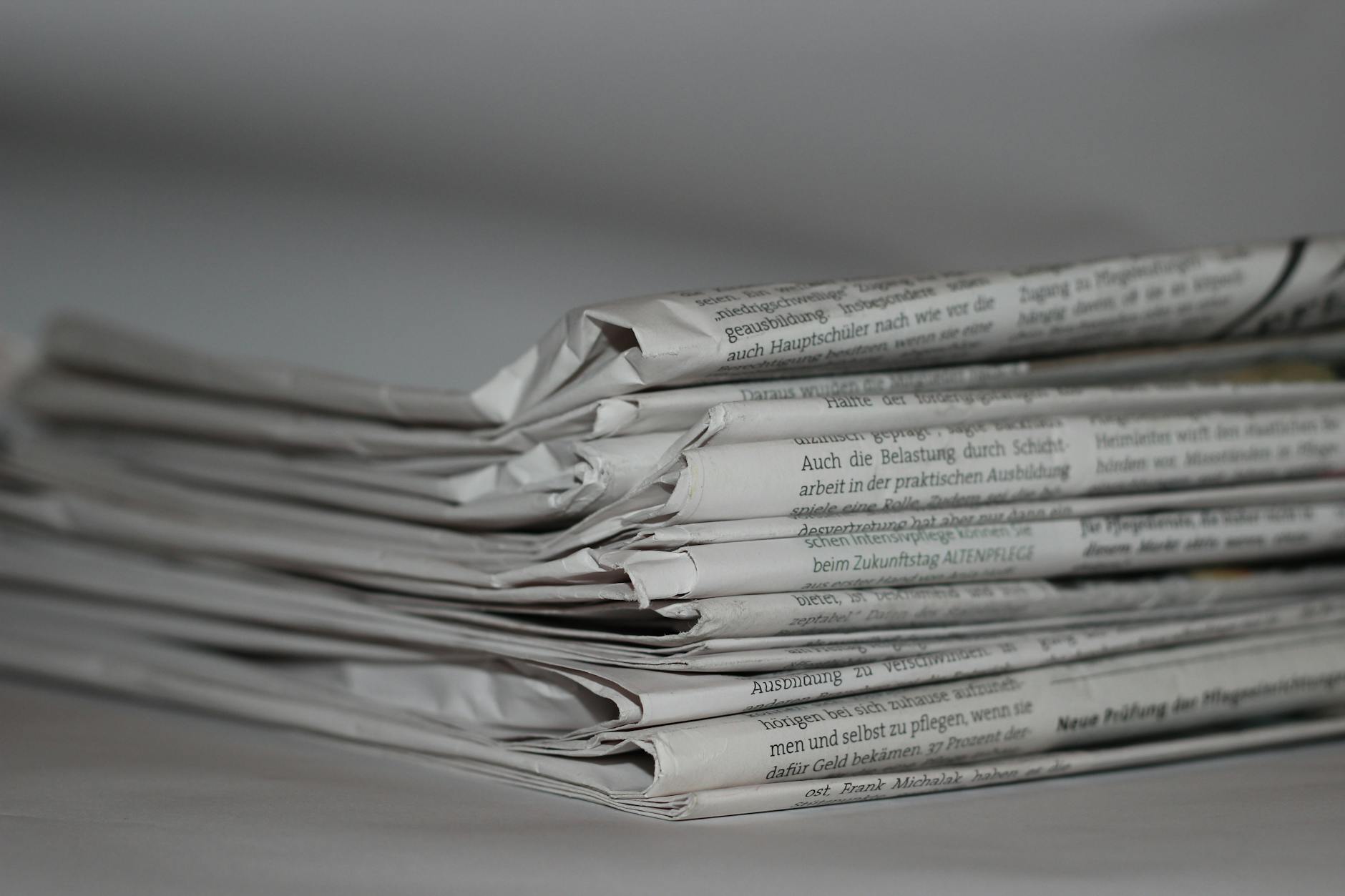
OK: How a Newspaper Joke From 1839 Became the Most Spoken Word on Earth
Think about how many times you've said or typed "OK" today. In a reply to an email. Answering a question from a coworker. Sending a quick text. It's so reflexive, so automatic, that it barely counts as language anymore — it's more like verbal punctuation. Linguists estimate it's the most widely understood word on the planet, used across hundreds of languages and cultures.
So where did it come from? A royal decree? An ancient trade language? Some profound moment in human communication?
Nope. It came from a deliberately misspelled joke in a Boston newspaper. And it was never supposed to last the week.
The Joke That Launched a Thousand Conversations
In the summer of 1839, Boston newspapers were running a peculiar comedic trend. Writers and editors, apparently with time on their hands, were playing games with intentional misspellings — abbreviating phrases incorrectly and then printing those abbreviations as if they were real shorthand. It was absurdist humor for the literary set, the kind of inside joke that probably landed better in context.
On March 23, 1839, the Boston Morning Post printed "o.k." as a jokey abbreviation for "oll korrect" — a deliberately mangled version of "all correct." That was it. That was the whole bit. The writer wasn't coining a new term or building a lasting piece of American vernacular. He was being silly in print, in the way that newspaper wits of the era occasionally were.
The abbreviation appeared a handful of times over the following months and then, as you'd expect from a throwaway gag, began to fade. It should have disappeared entirely. It almost did.
A Presidential Election Changed Everything
Here's where the story takes a genuinely strange turn. In 1840, Andrew Jackson's former vice president, Martin Van Buren, was running for reelection against William Henry Harrison. Van Buren was from Kinderhook, New York, and his supporters had taken to calling him "Old Kinderhook" as a campaign nickname. His political clubs started going by the initials: O.K.
The overlap with the Boston newspaper joke was too good to ignore. Van Buren's supporters began using "OK" as a rallying slogan — a double meaning that merged the existing slang with the candidate's nickname. Campaign buttons, banners, and newspaper endorsements pushed the abbreviation into national circulation for the first time. Suddenly, millions of Americans across the country were seeing and hearing "OK" in a political context, week after week throughout the election season.
Van Buren lost. But "OK" won.
The word had been turbocharged into the national consciousness by the sheer repetition of a presidential campaign, and it didn't quietly retreat when the election was over. It lingered in American speech, a little too catchy and a little too useful to disappear.
The Telegraph Locked It In
If the 1840 election gave "OK" its first real audience, it was the telegraph that made it permanent.
As electrical telegraph networks expanded across the United States through the 1840s and 1850s, operators quickly discovered that brevity was everything. Every word transmitted cost time and effort — dots and dashes tapped out by hand, received and transcribed at the other end. Short, unambiguous signals were gold.
"OK" was perfect. Two letters. Unmistakable. Universally understood to mean acknowledgment, confirmation, all clear. Telegraph operators adopted it as a standard signal to indicate that a message had been received correctly. It moved through the wires of every major American city, repeated thousands of times a day by operators who had no idea they were cementing a piece of slang into the foundation of modern communication.
By the time the telegraph gave way to the telephone and the telephone gave way to everything else, "OK" was already so deeply wired into American English that its origins had been almost entirely forgotten.
Why Everyone Has a Theory
Part of what makes the OK origin story so fascinating is how many competing explanations exist — and how confidently people assert them. Over the decades, various theories have credited the word to a Choctaw expression (okeh), a West African phrase (waw-kay), a Greek shipping term (ola kala, meaning "all good"), and a Civil War military abbreviation for zero casualties.
None of these have held up under serious historical scrutiny. The credit for definitively tracing OK to its 1839 Boston newspaper origin goes to linguist Allen Walker Read, who spent years in the 1960s methodically hunting through historical newspaper archives to reconstruct the trail. His research is about as solid as etymology gets. The misspelled joke theory isn't folklore — it's documented.
But the persistence of the alternative stories says something interesting: when a word becomes this ubiquitous, people want its origin to feel significant. A deliberate misspelling in a humor column feels too small, too random for something this enormous.
The Accidental Architecture of Everyday Language
That randomness is exactly the point. "OK" is a perfect case study in how language actually evolves — not through deliberate construction by scholars or formal adoption by institutions, but through accidents, timing, and the unpredictable way that certain sounds and shapes catch on in a culture.
A newspaper joke. A coincidental set of initials on a campaign button. The practical demands of a communication technology. None of those things were trying to build a word that would eventually be recognized from Boston to Bangkok. They just happened in sequence, and something stuck.
Next time you send a one-word reply — just "ok" — you're participating in a chain that runs all the way back to a Boston editor making a deliberately bad spelling joke on a slow news day in 1839. He'd probably find it hilarious.