How a Bad Spelling Joke From 1839 Boston Became the Most Spoken Word on Earth
How a Bad Spelling Joke From 1839 Boston Became the Most Spoken Word on Earth
Say "OK" out loud. You probably said it a few times already today without noticing. You've texted it, typed it, maybe even just given someone a thumbs up that means the same thing. It's the most frictionless word in American English — small, fast, and universally understood. It crosses language barriers in a way that almost no other expression does. Travelers report using it successfully in countries where they share zero common vocabulary with the locals.
So where did it come from?
The answer is stranger and more specific than you'd expect. We actually know. And knowing it makes the whole story feel like a near-miss.
Boston, 1839, and a Very Specific Kind of Humor
In the late 1830s, Boston newspapers were running a peculiar comedy bit. The joke was intentional misspelling — writers would take a common phrase, spell it wrong in a way that still made phonetic sense, then abbreviate it. "No go" became "K.G." (for "know go"). "All right" became "O.W." (for "oll wright"). It was the 19th-century equivalent of deliberately typing "u" instead of "you" — a winking, self-aware subversion of proper language.
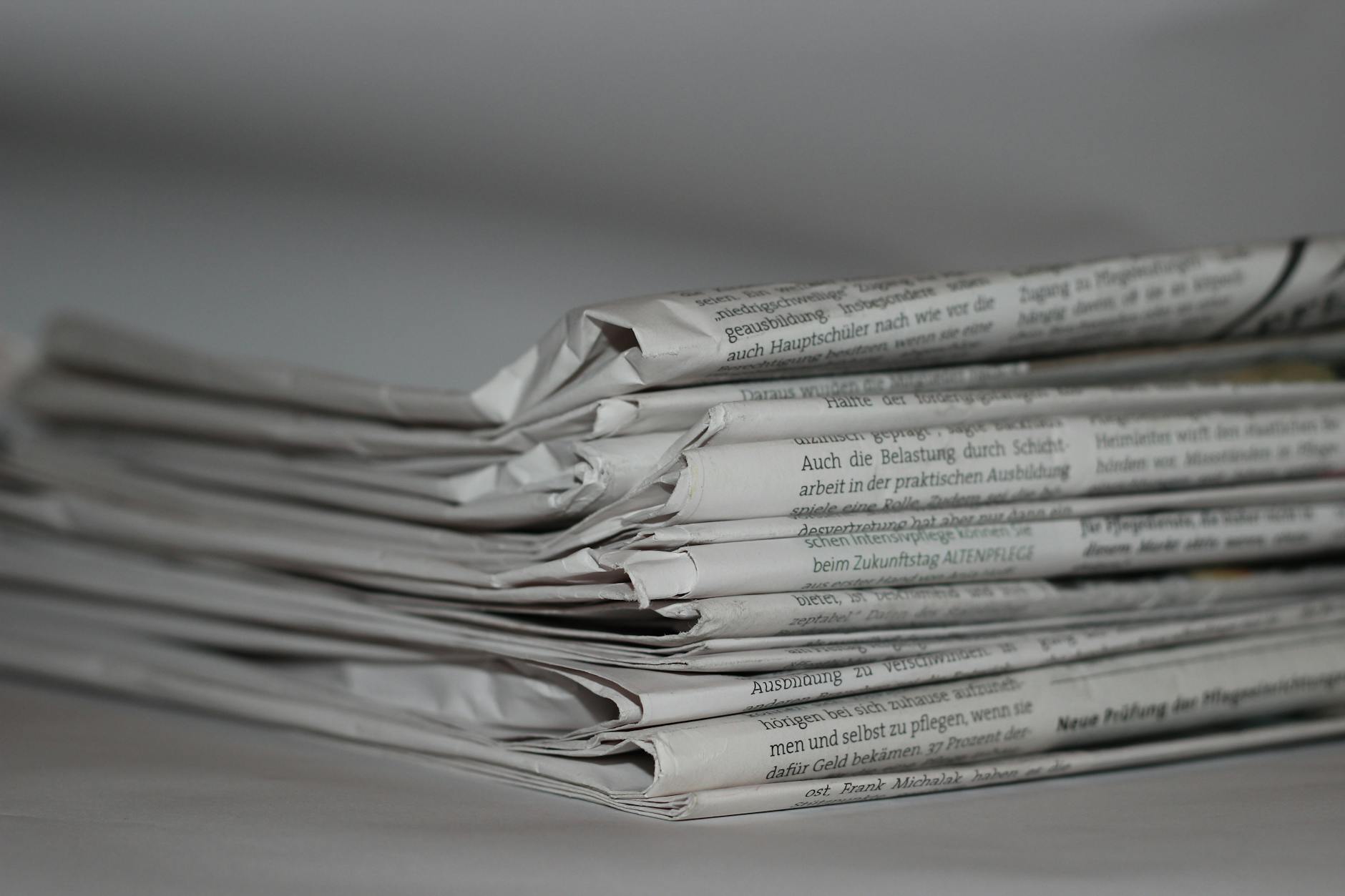
On March 23, 1839, the Boston Morning Post ran a piece that used one of these abbreviations almost as an aside: "o.k. — all correct." The joke being that "all correct" was being spelled as "oll korrect" and then shortened to its initials. It was a throwaway line. The editor, Charles Gordon Greene, almost certainly had no idea he was doing anything historically significant. He was just being a little silly in print, the way newspaper writers of that era often were.
That should have been the end of it.
Why It Didn't Just Disappear
Most of these abbreviation jokes died within weeks. "K.G." didn't survive. "O.W." didn't either. Dozens of similar coinages came and went in the same newspapers without leaving a trace. "OK" had no particular reason to outlast any of them — except that it got lucky twice in quick succession.
The first piece of luck was geographic spread. The abbreviation appeared in a few other papers in the following months, which was enough to give it a small foothold outside Boston. The second piece of luck was a presidential election.
Martin Van Buren's Accidental Gift to the English Language
In 1840, President Martin Van Buren was running for re-election. Van Buren was from Kinderhook, New York, and his supporters had taken to calling him "Old Kinderhook" as a campaign nickname — which they shortened to "O.K." They formed clubs called "OK Clubs" and used the initials as a rallying slogan. Suddenly, "OK" was appearing on banners, in speeches, and in newspapers across the country — not as a spelling joke, but as a political symbol.
Van Buren lost the election. But "OK" won something more durable. By the time the campaign was over, the expression had been seen and repeated widely enough that it took on a life of its own, detached from both the spelling joke and the defeated president. It had, through sheer repetition, become a real word.
Etymologist Allan Metcalf, who wrote an entire book on the subject, called this the most unlikely survival story in the English language. He's probably right.
The Near-Miss Nobody Talks About
Here's the part that should genuinely unsettle you: we almost said something completely different.
For decades after OK entered common use, its origin was completely obscure — people had forgotten the Boston newspaper joke almost immediately. Into that vacuum rushed a flood of competing theories. People claimed "OK" came from a Choctaw word, okeh, meaning "it is so." Others traced it to a West African language. Some insisted it was a Civil War-era military abbreviation. Andrew Jackson was said to have written it on documents as a shorthand for "all correct" — a story almost certainly invented to make the origin more heroic.
For most of the 19th and early 20th centuries, the real origin was genuinely lost. It wasn't recovered until 1963, when a Columbia University professor named Allen Walker Read did the archival legwork and traced the chain back to that single 1839 column in the Boston Morning Post. The whole thing had been sitting in old newspaper archives, waiting to be found, for over a hundred years.
If Read hadn't done that research — if the archives had been less complete, or if no one had thought to look — we'd probably still be arguing about Choctaw etymology.
Two Letters That Circled the Globe
Today, "OK" is used in virtually every language that has absorbed any English influence, which is to say most of them. It appears in French conversation, Japanese texting, Brazilian Portuguese, and Swahili. It may be the single most widely understood utterance on the planet.
All of that traces back to one editor making a mediocre spelling pun in a Boston paper on a Tuesday in March 1839, and one presidential campaign that happened to need a two-letter slogan the following year.
OK? OK.