The Man Who Broke Shopping
In 1916, walking into a grocery store meant one thing: standing in line, handing over a written list, and waiting while a clerk gathered your items from behind a tall counter. Customers never touched the merchandise. They never wandered aisles. They certainly never compared prices by walking around with a basket.
Then Clarence Saunders opened a strange little store in Memphis, Tennessee, and everything changed.
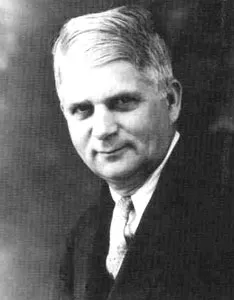 Photo: Clarence Saunders, via tennesseeencyclopedia.net
Saunders called his experiment "Piggly Wiggly"—a name so ridiculous that competitors assumed it would fail within months. Instead, it accidentally invented the modern American grocery store and killed off a shopping tradition that had existed for centuries.
 Photo: Piggly Wiggly, via seeklogo.com
The Clerk Behind Every Counter
Before Piggly Wiggly, grocery shopping was a deeply personal affair. Your neighborhood grocer knew your family, your preferences, and probably your financial situation. He'd recommend cuts of meat, suggest seasonal vegetables, and often extend credit when times got tough.
But this system had serious problems. Shopping took forever. Customers had no idea what items cost until checkout. Grocers could easily overcharge or substitute inferior products. And for busy housewives managing increasingly complex American households, the whole process felt painfully inefficient.
Saunders, who had worked in various retail jobs since childhood, watched these daily frustrations and saw an opportunity that nobody else recognized.
The Radical Experiment
On September 6, 1916, Saunders opened his first Piggly Wiggly store at 79 Jefferson Street in Memphis. The concept was shockingly simple: let customers walk through the store, pick up their own items, and pay at a single checkout counter.
To most people, this seemed insane. Why would customers want to do the work that clerks had always done? How could store owners prevent theft? What if people got confused and couldn't find anything?
Saunders had thought through these problems. He designed his store with a specific traffic pattern—customers entered through turnstiles, followed a predetermined path past every department, and exited through a single checkout lane. He clearly marked prices on every item. And he arranged products at eye level on open shelves, making everything visible and accessible.
The first customers were bewildered. Many asked where the clerks were. Some stood by the entrance, waiting for someone to take their orders. But once shoppers understood the system, something remarkable happened: they loved it.
The Speed of Self-Service
Suddenly, grocery shopping became fast. Customers could compare prices instantly. They could examine products before buying them. They could change their minds without embarrassing negotiations with clerks. And they could shop at their own pace, spending as much or as little time as they wanted.
For Saunders, the economics were even better. Self-service dramatically reduced labor costs. Higher customer turnover meant more sales per square foot. And the innovative store design encouraged impulse purchases—customers walking past every department meant they bought items they hadn't planned to need.
Within two years, Saunders had opened dozens of Piggly Wiggly stores across the South. By 1922, there were nearly 1,300 locations nationwide. Other retailers scrambled to copy the self-service model.
The Patent That Changed Everything
Saunders had been smart enough to patent his store design—specifically, the traffic flow system that guided customers through a predetermined path. Patent No. 1,242,872, granted in 1917, covered what he called the "self-serving store."
This patent should have made Saunders incredibly wealthy. Instead, it led to his downfall.
Competitors found ways to create self-service stores without violating Saunders' specific patent. Meanwhile, Saunders became obsessed with expanding too quickly and fighting legal battles instead of improving his business. In 1923, a disastrous stock market speculation scheme forced him to sell Piggly Wiggly to creditors.
The Bitter Irony
The cruelest twist came next. Saunders spent the rest of his life watching other companies perfect and profit from his invention. Safeway, A&P, and eventually giants like Kroger built massive fortunes using variations of the self-service model he had pioneered.
Saunders tried to launch new store concepts—including "Sole Owner of My Name" stores and later "Keedoozle" automated shops—but none succeeded. He died in 1953, largely forgotten, while the grocery industry he had revolutionized generated billions of dollars annually.
The World We Walk Through
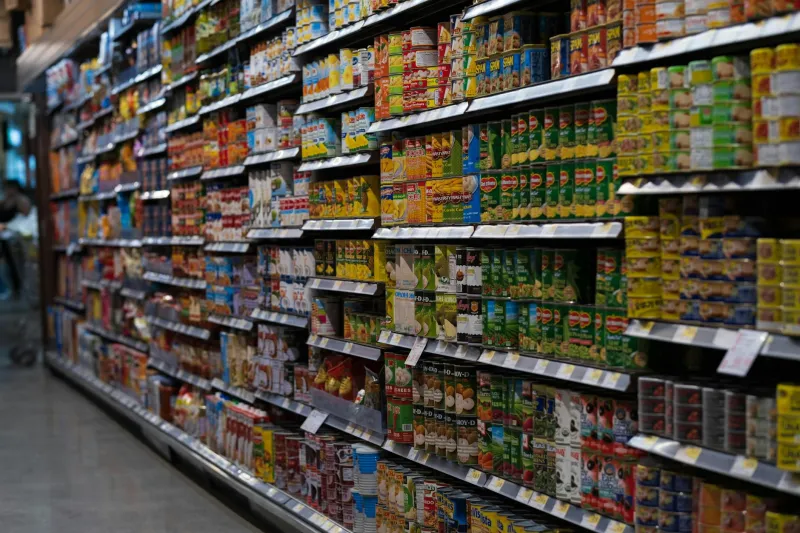
Today, Saunders' influence is everywhere, though few people know his name. Every supermarket layout, from the produce section at the entrance to the milk coolers at the back, traces back to his original traffic flow concepts. The shopping cart, the checkout lane, the barcode scanner—all are refinements of systems he first imagined.
More profoundly, Saunders changed how Americans think about shopping itself. The idea that customers should serve themselves, compare options, and make independent purchasing decisions now feels natural. But it required one Memphis merchant's radical experiment to prove that people actually wanted to do the work themselves.
The corner grocer who knew every customer's name disappeared, replaced by vast anonymous stores where efficiency mattered more than relationships. Whether that trade-off was worth it remains one of the most significant questions about American consumer culture—a question that Clarence Saunders answered accidentally in 1916, then spent the rest of his life regretting.