Where the Dead Led the Living
In 1831, a Massachusetts physician named Jacob Bigelow looked out at Boston's overcrowded urban cemeteries and saw a public health crisis waiting to happen. Disease was spreading through densely packed graveyards, and the city was rapidly running out of burial space. His solution seemed radical at the time: move the dead to park-like settings in the countryside, surrounded by carefully maintained grass and ornamental trees.
Bigelow's Mount Auburn Cemetery opened in 1831 as America's first "garden cemetery," featuring rolling lawns, winding paths, and meticulously groomed grass that extended unbroken across acres of burial grounds. The design was revolutionary—instead of cramped urban plots marked by towering headstones, the dead rested beneath expanses of green lawn punctuated by subtle markers and carefully placed shade trees.
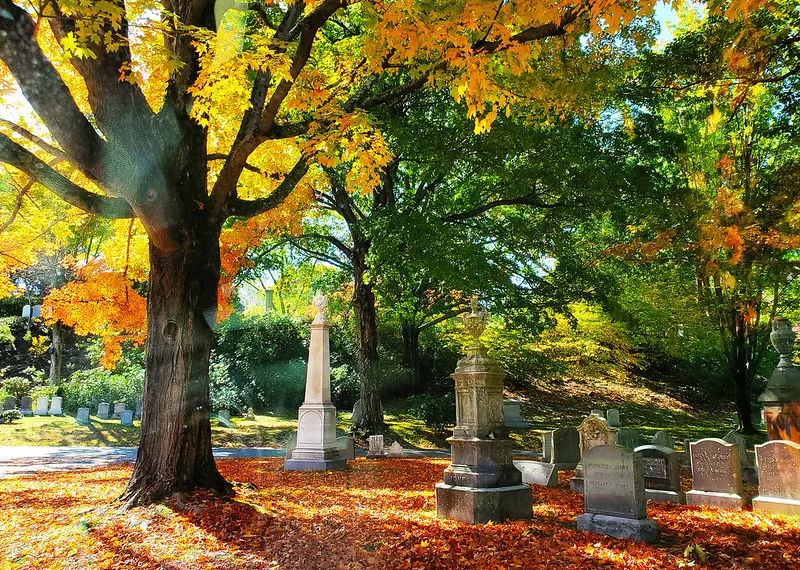 Photo: Mount Auburn Cemetery, via www.mountauburn.org
What Bigelow couldn't have predicted was how the living would respond to these peaceful, park-like spaces. Families began visiting Mount Auburn not just to mourn, but to enjoy the manicured landscape. The cemetery became Boston's most popular recreational destination, drawing thousands of visitors who came to stroll across the beautiful lawns and admire the groundskeeping.
The Lawn as Social Statement
The garden cemetery movement spread rapidly across America, and with it came a new aesthetic standard: the perfectly maintained lawn. For the first time, ordinary Americans were exposed to the concept of ornamental grass—grass that served no agricultural purpose but existed purely for visual appeal.
These cemetery visits became informal education in landscape design. Families saw how professional groundskeepers maintained uniform grass height, eliminated weeds, and created seamless green carpets that stretched across rolling terrain. The message was clear: well-maintained lawns represented order, prosperity, and respectability.
By the 1850s, landscape architect Andrew Jackson Downing was promoting the cemetery aesthetic for residential use, arguing that American homes should be surrounded by the same carefully tended lawns that made cemeteries so appealing. Downing's writings connected lawn maintenance to moral character, suggesting that families who maintained beautiful grass demonstrated civic virtue and personal discipline.
From Cemetery to Suburb
The connection between cemetery design and residential lawns became explicit in post-Civil War suburban development. Developers like Llewellyn Haskell, who created Llewellyn Park in New Jersey, directly borrowed cemetery landscaping principles for residential neighborhoods.
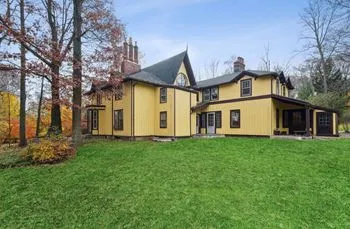 Photo: Llewellyn Park, via llewellynpark.com
Haskell's 1853 development featured the same elements that made garden cemeteries so attractive: winding roads, mature trees, and most importantly, front yards dominated by unbroken expanses of lawn. The similarity to cemetery design wasn't coincidental—Haskell explicitly modeled his suburban landscape on the garden cemetery movement, believing that the same principles that made death peaceful could make life more pleasant.
This cemetery-inspired suburban design established the template for American residential development that persists today. The front lawn became the defining feature of American homes, a semi-public space that demonstrated the homeowner's commitment to community standards while providing the visual continuity that made neighborhoods feel cohesive.
The Postwar Lawn Explosion
World War II veterans returning home with GI Bill benefits and suburban dreams found themselves inheriting a landscape tradition rooted in 19th-century cemetery design, though few realized the connection. Suburban developers like William Levitt mass-produced neighborhoods where every home featured the same basic element: a front yard dominated by carefully maintained grass.
Levittown and similar developments didn't just sell houses—they sold a lifestyle that included lawn maintenance as a fundamental responsibility of homeownership. The developers provided detailed instructions for grass care, recommended fertilizers and equipment, and established community standards that made lawn maintenance a social obligation.
This postwar suburban boom coincided with advances in lawn care technology that made cemetery-quality grass maintenance accessible to ordinary homeowners. Affordable mowers, chemical fertilizers, and hybrid grass varieties allowed suburban families to achieve the same manicured appearance that had previously required professional groundskeepers.
The Economics of Green Status
By the 1960s, lawn care had become a significant economic force in American life. The industry that began with cemetery groundskeeping had evolved into a massive consumer market selling everything from riding mowers to specialized fertilizers designed for specific grass varieties.
Americans began spending substantial portions of their leisure time and disposable income maintaining lawns that served no practical purpose beyond visual appeal. The irony wasn't lost on critics who pointed out that families were dedicating enormous resources to growing grass they couldn't use for anything except looking at.
But the economic investment reflected the social importance of lawn maintenance in American communities. A well-maintained front lawn signaled financial stability, community commitment, and adherence to shared aesthetic standards. Conversely, an unkempt lawn could affect property values and social standing throughout the neighborhood.
The Modern Lawn Industrial Complex
Today, Americans spend approximately $40 billion annually on lawn care—more than the gross domestic product of many countries. This massive industry supports everything from professional landscaping services to specialized equipment manufacturers, all descended from the cemetery groundskeeping techniques that Jacob Bigelow pioneered in 1831.
The environmental cost of this cemetery-inspired obsession is staggering. American lawns cover roughly 40 million acres—an area larger than most U.S. states—and require enormous inputs of water, fertilizer, and fossil fuels to maintain the uniform appearance that garden cemeteries made desirable.
Modern suburbs still follow the basic design principles established by 19th-century cemetery designers: houses set back from streets, surrounded by unbroken lawns that create visual continuity across neighborhoods. The aesthetic that made death more palatable became the foundation for American residential life.
From Rest in Peace to Keeping Up Appearances
The next time you see someone obsessing over their lawn care routine—measuring grass height, applying fertilizer, or spending Saturday mornings behind a mower—remember that they're participating in a tradition that began in graveyards. The American front lawn represents one of the most successful examples of cemetery design principles being adopted for everyday life.
What started as Jacob Bigelow's solution to urban burial problems became the defining characteristic of American neighborhoods, proving that sometimes our most cherished traditions have the most unexpected origins. The perfect American lawn isn't just about gardening or suburban pride—it's about bringing the peaceful, orderly aesthetic of death into the messy reality of daily life.
In a strange way, every American suburb is a living memorial to the garden cemetery movement, where the dead taught the living how to live surrounded by beautiful, perfectly maintained grass.