When Streets Were Battlefields
Picture downtown Cleveland in 1914: horse-drawn carriages sharing narrow streets with sputtering Model T Fords, pedestrians darting between vehicles, and absolutely no system to manage the chaos. Intersections weren't governed by signals—they were survival contests where the boldest (or most reckless) claimed the right of way.
Police officer Lester Wire had seen enough accidents. Too many broken bones, too many spooked horses, too many close calls with the growing number of automobiles creeping into American cities. His solution was decidedly low-tech: a wooden box mounted on a pole, equipped with red and green lights that he could operate manually with a simple switch.
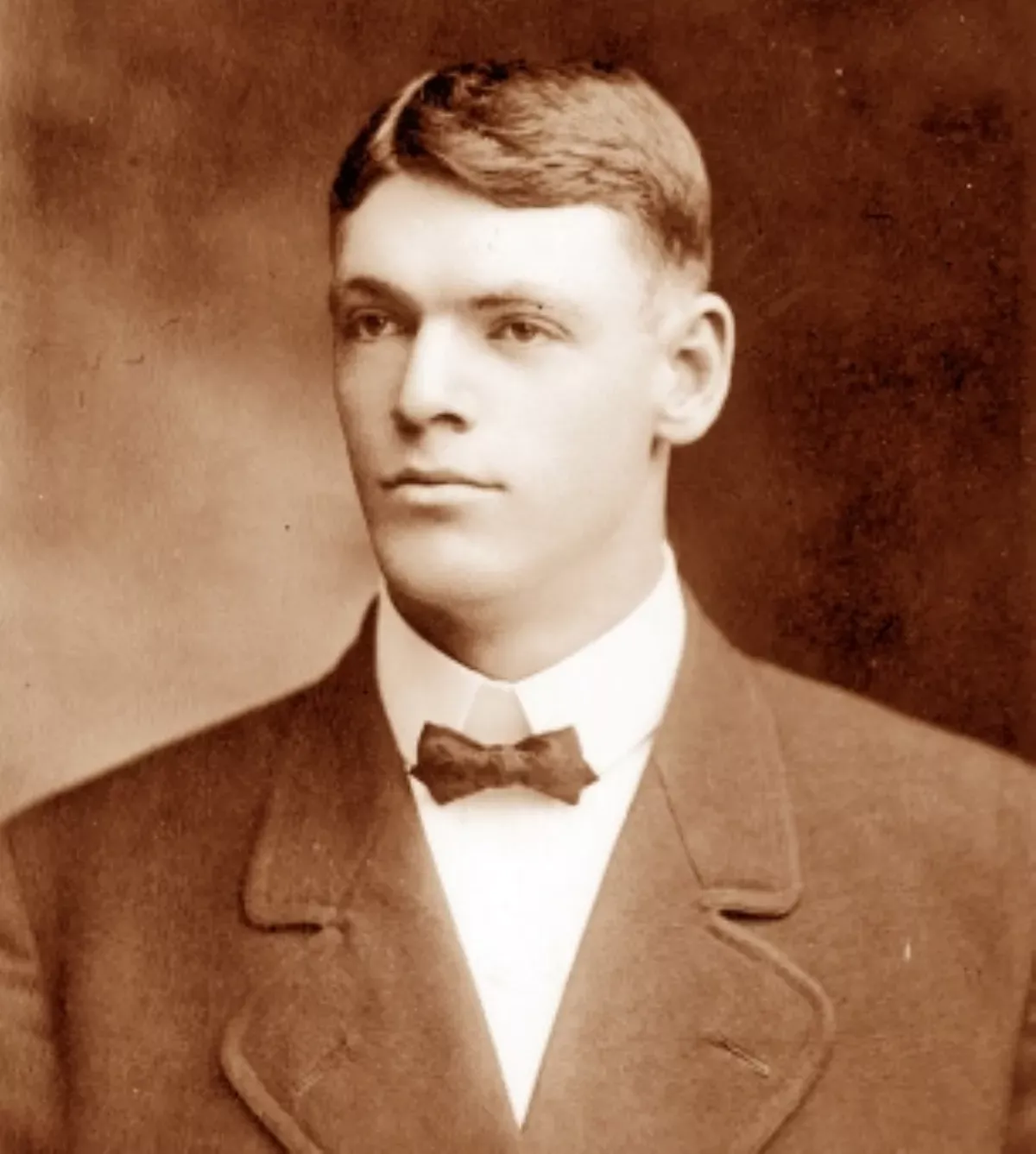 Photo: Lester Wire, via www.factsnippet.com
Wire's contraption debuted at the corner of Euclid Avenue and East 105th Street on August 5, 1914. It wasn't pretty, and it certainly wasn't automated, but it worked. For the first time in American history, an intersection had a referee.
The Resistance Movement
You'd think car manufacturers would have embraced anything that made driving safer, but the early automotive industry saw traffic signals as a threat to their grand vision. Henry Ford and his contemporaries were selling Americans on the promise of freedom—the open road, the ability to go anywhere, anytime. Traffic lights represented the opposite: control, waiting, submission to authority.
Detroit's automakers lobbied against traffic signal installation, arguing that stopping and starting would damage engines and discourage car ownership. They preferred the European model of roundabouts, which kept traffic flowing continuously. The irony wasn't lost on safety advocates: the same industry selling "horseless carriages" as the future of transportation was fighting the very infrastructure that would make that future possible.
From Hand-Cranked to High-Tech
Wire's manual system was revolutionary but impractical for widespread adoption. Police officers couldn't stand at every intersection, manually switching lights all day. The breakthrough came in 1920 when Detroit police officer William Potts added the yellow light to the mix, creating the three-color system we know today.
Potts borrowed the yellow concept from railroad signals, where it meant "caution." His electric, automated system could cycle through the colors without human intervention, making traffic lights scalable for growing cities. Detroit installed the first four-way, three-color traffic light at the intersection of Woodward and Michigan avenues, and suddenly every major American city wanted one.
By 1930, traffic lights were appearing in cities across the country, each municipality developing its own timing systems and installation standards. The federal government didn't step in to standardize traffic signals until 1935, when the need for consistent rules became obvious as Americans began driving longer distances between cities.
The Psychology of Compliance
What Wire couldn't have predicted was how his simple wooden box would become one of the most studied examples of human behavioral conditioning in history. Traffic lights represent something unique in American society: a rule that nearly everyone follows, nearly all the time, even when no one's watching.
Sociologists have spent decades trying to understand why Americans—a population famously skeptical of authority—will sit alone at a red light at 3 AM on an empty street, waiting for permission to proceed. The answer seems to lie in the intersection of safety, social contract, and the peculiar American relationship with automobiles.
Traffic lights became the training ground for a mobile society. They taught Americans that driving wasn't just about personal freedom—it was about participating in a complex system that required cooperation and shared understanding. Every red light was a small lesson in civic responsibility.
The Unintended Consequences
Today, the average American driver spends roughly 54 hours per year waiting at traffic lights—more than a full work week of idle time. Traffic engineers have created increasingly sophisticated systems to minimize wait times, using sensors, cameras, and AI to optimize traffic flow, but they're still working within Wire's basic framework: red means stop, green means go.
The traffic light also fundamentally changed American urban design. Cities began planning around the assumption that intersections would be controlled, leading to longer blocks, wider streets, and the car-centric infrastructure that defines most American cities today. What started as a safety measure became the foundation for an entire way of life.
From Cleveland to the World
Lester Wire probably never imagined that his hand-cranked wooden box would become America's most exported urban innovation. Traffic lights spread from American cities to the rest of the world, carrying with them a distinctly American approach to managing public space: technological solutions, individual compliance, and the assumption that order could be imposed through clear, simple rules.
Today, there are more than 300,000 traffic signals operating in the United States, each one a descendant of Wire's original Cleveland experiment. They've become so fundamental to American life that we rarely notice them—until they malfunction and remind us how much of our daily routine depends on three colored lights mounted on a pole.
The next time you're sitting at a red light, consider that you're participating in a system that began with one police officer's frustration with chaotic intersections. Wire's wooden box didn't just organize traffic—it helped organize American society itself, one intersection at a time.