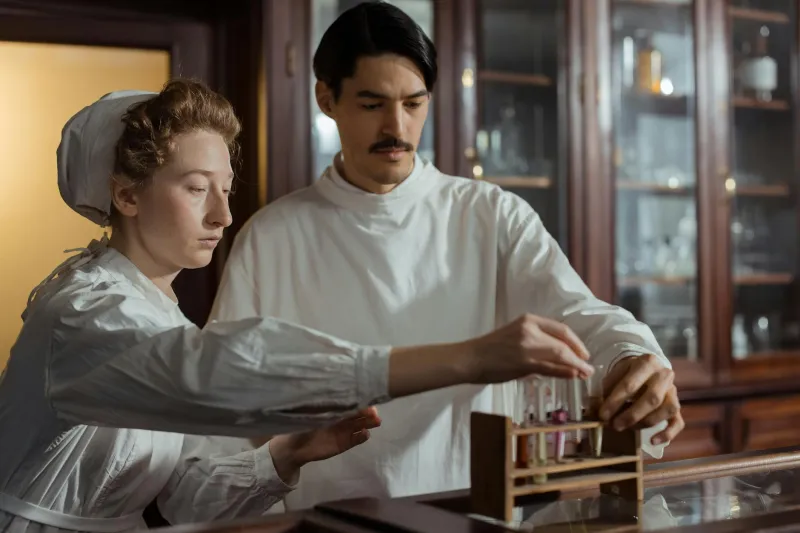
The Problem That Didn't Exist
For thousands of years, humans simply smelled like humans. Body odor was as natural and unremarkable as breathing. People bathed when convenient, used perfumes when available, and generally accepted that everyone carried their own particular scent.
Then, in 1912, everything changed. A young woman named Edna Murphey stood nervously behind a small booth at a Cincinnati trade fair, trying to sell a product that solved a problem most Americans didn't know they had.
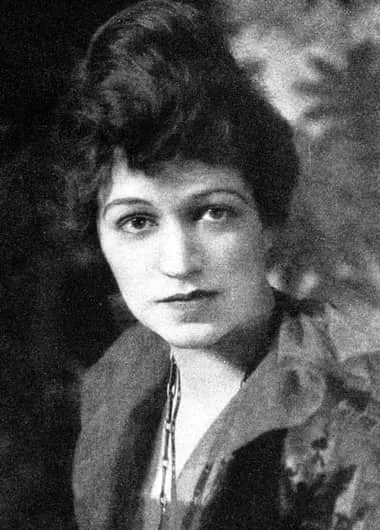 Photo: Edna Murphey, via cdn.kibrispdr.org
Her success would reshape American personal hygiene forever—and create one of the most profitable forms of manufactured anxiety in consumer history.
The Surgeon's Daughter
Edna Murphey's father, Dr. Abraham Murphey, was a Cincinnati surgeon who had grown tired of his own sweaty hands slipping during operations. In his home laboratory, he developed an aluminum chloride solution that could temporarily block sweat glands. He called it "Odorono"—a contraction of "odor-oh-no."
The formula worked perfectly for Dr. Murphey's medical needs. But young Edna saw a different opportunity. If the solution could stop her father's hands from sweating, why couldn't it prevent the underarm perspiration that occasionally dampened her dresses?
She began experimenting with the formula, adjusting the concentration and testing it on herself. The results were remarkable: complete protection from underarm wetness and odor for days at a time.
But when Edna tried to interest friends and family in her father's invention, she encountered a wall of indifference. Why would anyone need such a product? Wasn't a little perspiration just normal?
The Trade Fair Gamble
Determined to prove the market existed, Edna invested her entire $150 life savings in a booth at the 1912 Cincinnati trade fair. She prepared samples, printed simple labels, and spent days explaining to puzzled visitors why they might want to prevent something as natural as sweating.
The response was underwhelming. Most people walked past without stopping. Those who did listen often seemed confused or mildly offended by the suggestion that their natural body functions needed correcting.
But Edna sold just enough bottles to convince herself that somewhere, somehow, there had to be a market for Odorono. The question was how to find it.
The Shame Campaign
Edna's breakthrough came when she realized that creating demand meant creating embarrassment. If people weren't naturally worried about body odor, she would have to teach them to worry.
She began crafting advertising copy that introduced entirely new anxieties into American life. Her ads didn't just sell deodorant—they sold the terrifying possibility that you might be offending others without knowing it.
"A woman's arm!" read one famous Odorono advertisement. "Poets have sung of it, great artists have painted its beauty. It should be the daintiest, sweetest thing in the world. And yet, unfortunately, it isn't always."
Another ad warned: "Within the curve of a woman's arm. A frank discussion of a subject too often avoided."
The messaging was revolutionary in its psychological sophistication. Instead of addressing a known problem, these ads created doubt, embarrassment, and social fear around something people had never previously considered problematic.
The Backlash and Breakthrough
Edna's early advertising campaigns triggered fierce criticism. Women's magazines initially refused to run the ads, calling them inappropriate and offensive. The Ladies' Home Journal, America's most influential women's publication, banned Odorono advertisements for years.
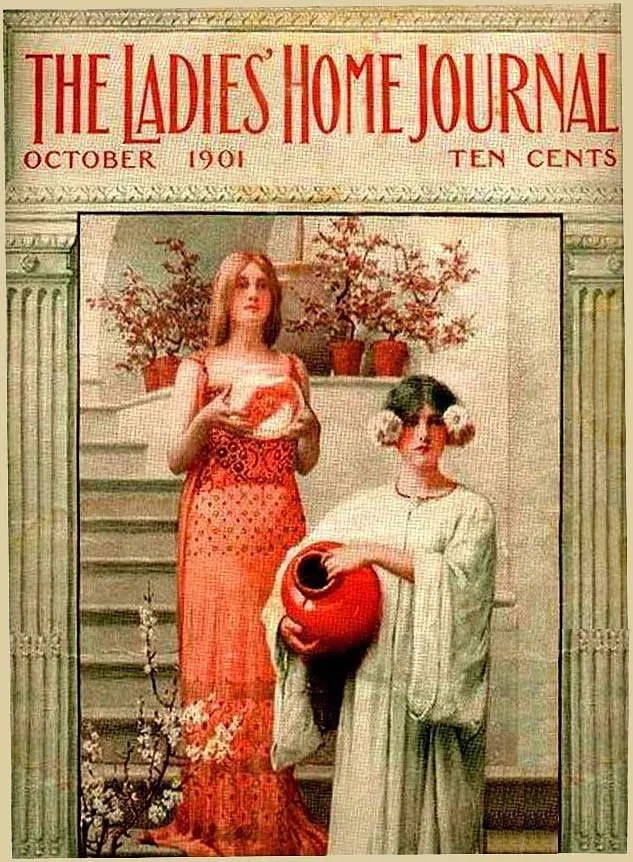 Photo: Ladies' Home Journal, via i.pinimg.com
Many readers wrote angry letters complaining that the ads were vulgar, unnecessary, and insulting to proper ladies who maintained appropriate hygiene through regular bathing.
But Edna had identified a genuine cultural shift happening in American society. As more women entered the workforce and social situations became more crowded and intimate, the tolerance for natural body odors was quietly declining.
Urban living, office work, and improved transportation meant people spent more time in close proximity to strangers. Electric lighting made social gatherings longer and more frequent. Fashion trends favored lighter fabrics and more fitted clothing that showed perspiration stains.
The Tipping Point
The breakthrough came during World War I, when changing social conditions finally aligned with Edna's marketing message. Women taking factory jobs worried about offending coworkers. Social dancing became more popular, creating intimate situations where body odor felt more problematic.
Most importantly, a generation of young Americans had grown up seeing Odorono advertisements, gradually internalizing the idea that body odor was something to prevent rather than accept.
By 1919, Odorono sales had exploded. Competitors rushed to develop their own antiperspirants and deodorants. What had once been a non-existent market became a multimillion-dollar industry almost overnight.
The Anxiety Economy
Edna Murphey had accidentally discovered one of the most powerful forces in American consumer culture: the ability to create markets by manufacturing social anxieties.
Her success with Odorono established a template that advertisers would use for decades. Bad breath, dandruff, static cling, ring around the collar—entire industries would be built around convincing Americans they had embarrassing problems that required immediate commercial solutions.
The deodorant industry that Edna created now generates over $18 billion annually in the United States alone. Americans spend more on antiperspirants and deodorants than most countries spend on their entire healthcare systems.
The Cultural Transformation
More profoundly, Edna Murphey changed how Americans think about their own bodies. The idea that natural human scents are inherently problematic—something that would have seemed bizarre to previous generations—now feels completely normal.
Modern Americans shower daily, apply deodorant religiously, and feel genuine anxiety about potential body odor in ways that would have puzzled their great-grandparents. We've become a culture that spends billions of dollars annually to smell like nothing at all.
Whether this represents progress or the successful commercialization of human insecurity remains debatable. But there's no question that one young woman's trade fair experiment fundamentally altered how an entire society relates to its own biology.
Edna Murphey didn't just invent a product—she invented a problem that didn't exist, then convinced millions of people they desperately needed to solve it.